
By the PetsTEK Training Team · Updated October 2026
This site is by PetsTEK, the dog training gear store. The collars below are products we sell. This page answers one question: what gives you a reliable recall at the distance your dog actually bolts? Every price and spec below was checked against live PetsTEK listings on October 30, 2026 — click through for the current price and stock. We have not hands-on tested these collars on runaway dogs ourselves; the picks below are judged on verified specs, range, and recall design, not on claimed testing. A training collar is not a fence, not a leash, and not a substitute for teaching recall — it reinforces a recall the dog already knows, at a distance where your voice no longer reaches.
Quick answer: For most dogs that run away, buy the Garmin PRO 550 ($399.99): a full mile of range, beacon lights to find a dog in brush or low light, and 21 levels of Continuous and Momentary stimulation with Tone and Vibration. For a strong dog on a tighter budget, the Dogtra 1900X ($254.99) gives 3/4-mile range with a dial remote you can operate by feel. For yard and neighborhood bolting, the SportDOG FieldTrainer 425X ($154.99) covers 500 yards for the least money. Before any of them: teach recall on a long line first, then wear the collar for 2–4 weeks with zero corrections while you condition tone and vibration — a collar strapped onto a dog that has never learned “come” will not teach it, and chasing a bolting dog with a higher level will only teach it to run farther.
A dog that runs away fails in one of three places, and the collar you buy should match the place yours fails. Some dogs have never truly learned recall — they come in the kitchen and ignore you at the park gate, which is not disobedience, it is an untrained command in a distracting place. Some dogs know recall but outrun your voice — a deer, another dog, or an open gate, and by the time you shout, the dog is 200 yards away and cannot hear you clearly. And some dogs run from fear or anxiety — thunder, fireworks, a new place — where a correction can make the panic worse, not better. Only the middle dog is a training-collar dog. The collars below are judged on exactly what that dog needs: range beyond your longest real bolting distance, a tone or vibration cue the dog can learn to answer before stim is ever needed, a beacon light for the dog that has already gone, and a remote you can use without looking at it while the dog is moving away from you.
Start Low, Go Slow: The Recall Conditioning Sequence
Do this before you ever correct a bolting dog, in this order:
- Weeks 1–2 (or up to 4): the dog wears the collar, switched on, with zero corrections. Fit it high behind the ears, check both contact points touch skin, and train recall on a long line with high-value treats. The collar is furniture during this phase, not a tool.
- Pair the cue: every recall on the long line gets tone or vibration first, then the treat when the dog turns toward you. Repeat until the dog turns on tone or vibration alone, with no stim involved. That tone-first recall is the whole point — stim is the backup for the day the dog is already running, not the daily cue.
- Find the working level at home, not at the park: start at the bottom of your own collar’s scale and work up to the first mild reaction — an ear flick, a head turn, a brief pause. That level is for this dog, on this collar, today. Never copy a level from another owner or another brand.
- Proof it in stages: quiet yard, then busier yard, then a fenced park, then a long line in open ground — only moving on when recall is reliable at each step. A dog that fails at the park gate has not failed the collar; it has skipped a step.
- Phase it out: as recall holds, use tone alone more and more, then drop the collar for short, safe sessions, then longer ones. Watch for collar-smart behavior — a dog that recalls perfectly with the collar on and ignores you without it has learned to obey the collar, not the command. If that happens, go back a step and mix collar-on and collar-off sessions on the long line.
Range by Use Case — Buy for Your Longest Bolting Distance
Advertised range is line-of-sight best case. Trees, hills, buildings, and even the dog’s own body cut real-world range, so buy more range than your longest training distance:
- Yard, gate, and driveway bolting: 300–500 yards is plenty. The 425X (500 yards) and PetSafe 900 (900 yards) cover this ground.
- Park and trail recall: 1/2 mile or more. The ET-300 (1/2 mile) is the floor here, and the 3/4-mile systems are the safer buy.
- Open field, farm, and hunting ground: a full mile. Only the PRO 550 on this page is rated for it — and if your dog regularly ranges beyond a mile, no collar on this page is the right tool, and a trainer and a secure containment plan come first.
- Check the basics first: a dog that bolts may be under-exercised, under-trained on-leash, bored, intact and roaming, or frightened. More exercise, a long line, a secure fence, and foundation recall training fix more runaways than any collar — rule those out before you buy.
Quick Answer: Which Collar for Which Runaway Dog
| Your situation | Pick | Why |
|---|---|---|
| Dog that runs at a full mile, field or farm | Garmin PRO 550 | Full mile, beacon lights, 21 levels, trains up to 3 dogs |
| Strong dog that bolts, dial remote by feel | Dogtra 1900X | 3/4 mile, dial remote, robust receiver, sized 35 lbs+ / 13″+ necks |
| Park and trail recall + bark control | Garmin Sport PRO | 3/4 mile, beacon lights, BarkLimiter, collar + handheld bundle |
| Sensitive dog, finest level control | Mini Educator ET-300 | 100 levels, Pavlovian tone, customizable contact points, 1/2 mile |
| Yard and neighborhood bolting, simplest controls | PetSafe 900 Yard | 900 yards, safety lock, neck fit up to 27 inches |
| Runaway dog on a budget | SportDOG FieldTrainer 425X | 500 yards, 21 levels, $154.99 — the cheapest real recall system here |
The Six Collars Compared
| Collar | Best for runaway dogs | Range | Stim Levels & Modes | Shock Function | Recall fit | Check price | |
|---|---|---|---|---|---|---|---|
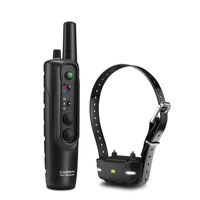 | Garmin PRO 550 — $399.99 | Best overall for runaway dogs | 1 mile | 21 levels; Continuous, Momentary, Tone, Vibration, beacon lights, BarkLimiter | Yes | Full-mile field build; trains up to 3 dogs | View Garmin PRO 550 on PetsTEK → |
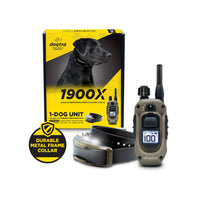 | Dogtra 1900X — $254.99 | Strong dog, dial remote by feel | 3/4 mile | 100 levels; Nick, Continuous, XPP vibration, Tone, Boost | Yes | Robust receiver; 35 lbs+, neck 13″+ | View Dogtra 1900X on PetsTEK → |
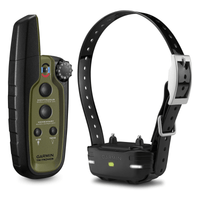 | Garmin Sport PRO Bundle — $299.99 | Park and trail recall | 3/4 mile | 10 levels; Continuous, Momentary, Vibration, Tone, beacon lights, BarkLimiter | Yes | Field build; trains up to 3 dogs | View Garmin Sport PRO on PetsTEK → |
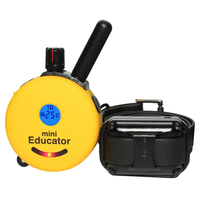 | Mini Educator ET-300 — $199.99 | Sensitive dog, finest control | 1/2 mile | 100 levels; Nick, Continuous, Vibration, Pavlovian tone, Boost 1–60 | Yes | Customizable contact points; fits small, medium, and large dogs | View Mini Educator ET-300 on PetsTEK → |
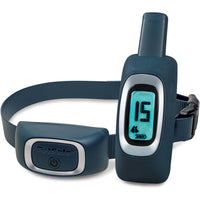 | PetSafe 900 Yard Remote Trainer — $199.95 | Simplest recall system | 900 yards | 15 levels; Tone, Vibration, Static; safety lock | Yes | 8 lbs+, neck 6″–27″; expands to 2 dogs | View PetSafe 900 Yard on PetsTEK → |
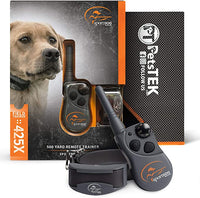 | SportDOG FieldTrainer 425X — $154.99 | Best value for runaway dogs | 500 yards | 21 levels; Nick, Constant, Tone, Pager vibration | Yes | 8 lbs+; DryTek waterproof build; expands to up to 3 dogs | View SportDOG FieldTrainer 425X on PetsTEK → |
A stim number is NOT comparable across brands — the ET-300’s 100 levels, the PRO 550’s 21, and the Sport PRO’s 10 are different scales. Compare range, recall cue, and remote ergonomics, not raw level counts. Advertised range is line-of-sight best case — hills, trees, and buildings cut real-world range, so buy more range than your longest bolting distance. Prices checked against live PetsTEK on October 30, 2026 — click through for the current price and stock. Source: petstek.com live listings.
The Picks in Detail
Garmin PRO 550 — Best Overall for Dogs That Run Away ($399.99)
The PRO 550 is the runaway pick because it solves the two problems a bolting dog creates at once: distance and finding the dog again. Range is a full mile, the longest on this page, with 21 levels of Continuous and Momentary stimulation, Tone, Vibration, remotely operated LED beacon lights for low-light work, and a built-in BarkLimiter with AutoRise. It trains up to three dogs on one handheld. The beacon lights earn their keep the evening a dog slips the gate at dusk — a light you can switch on from the remote beats shouting into brush. The trade-off is price and bulk: this is a field tool, priced like one, and overkill for a dog that only bolts across the yard.
Choose if: your dog ranges to a full mile, you train in open country, or you want beacon lights for low-light recovery.
Who should skip it: yard and neighborhood bolters — a mile of range you never use is money spent on nothing, and the 425X or PetSafe 900 covers that ground.
Dogtra 1900X — Best for a Strong Dog That Bolts ($254.99)
The 1900X is the strong-dog recall pick: a robust, metal-cased receiver sized for dogs 35 lbs and up with 13-inch-plus necks, built to hold its position on a strong dog in rough use, with a dial remote you can operate by feel while your eyes stay on the dog — the detail that matters most when the dog is already moving away. Range is 3/4 mile, and the 100 levels with Nick, Continuous, XPP vibration, Tone, and Boost give fine control. Its honest limit is the floor, not the ceiling — a small dog under 35 lbs is a bad match for this receiver, so in a mixed-size household, fit the smaller dog first (see our small-dogs guide).
Choose if: your dog is 35 lbs or more, you want a dial remote you can use without looking, or you train outdoors at 3/4 mile.
Who should skip it: owners of a small bolter — the receiver is too big under 35 lbs, so fit the smaller dog first.
Garmin Sport PRO — Best Park and Trail Recall System ($299.99)
The Sport PRO is the park-and-trail all-rounder in a bundle: collar plus handheld, 3/4-mile range, 10 levels of Continuous and Momentary stimulation, Vibration, Tone, LED beacon lights, and a built-in BarkLimiter, training up to three dogs. The 10-level scale is coarser than the ET-300’s 100 or the PRO 550’s 21, so if your bolter needs very fine level differences, the ET-300 adjusts more precisely. For most runaway dogs, though, the Sport PRO’s combination of range, beacon lights, and bark control is the sweet spot — and the beacon lights matter when a dark-coated dog disappears into brush at dusk.
Choose if: you train in parks and on trails, you want bark control built in, or you work in low light and want the beacon lights.
Who should skip it: pairs that need fine-grained level differences, or first-time buyers on a tight budget — the 425X does the core job for half the price.
Mini Educator ET-300 — Best for a Sensitive Dog That Bolts ($199.99)
The ET-300 is the sensitive-bolter pick because its control is the finest here: 100 levels of Educator’s blunt pulse with Nick, Continuous, Vibration, Pavlovian tone, and Boost 1–60, plus customizable contact points per the live PetsTEK listing. The Pavlovian tone is the recall feature that matters most — pair tone with recall on the long line until the dog turns on tone alone, and stim becomes a rarely used backup rather than the daily cue. Range is 1/2 mile, and it fits small, medium, and large dogs. Its honest limit is range, not control: a dog that regularly bolts beyond 1/2 mile needs the 1900X or a Garmin above.
Choose if: your dog is sensitive or skittish, you want the finest level control, or you want a tone-first recall system.
Who should skip it: owners whose dog bolts beyond 1/2 mile — buy range once with the 1900X or PRO 550 instead of outgrowing this one.
PetSafe 900 Yard Remote Trainer — Simplest Recall System ($199.95)
PetSafe’s pitch is simplicity, and the 900 Yard is the bolter-friendly end of that line: 900 yards of range, 15 levels of Tone, Vibration, and Static, a safety lock so the level can’t drift, and a neck fit up to 27 inches — the widest stated neck range on this page, which matters for a giant breed that bolts. It expands to a two-dog system with the matching receiver. The honest limit is range and ruggedness: 900 yards is plenty for yard, gate, and neighborhood bolting, but it is not a field system, and it has no beacon light.
Choose if: this is your first training collar, your dog bolts in the yard or neighborhood, or your dog’s neck is at the giant end of the scale.
Who should skip it: field trainers — buy range once with the Sport PRO or 1900X instead of outgrowing this one.
SportDOG FieldTrainer 425X — Best Value ($154.99)
The 425X is the cheapest real recall system on this page, and it doesn’t feel like a compromise for everyday recall: 500 yards, 21 levels, Nick and Constant static, Tone, and Pager vibration, expandable to three dogs, for dogs 8 lbs and up, with a DryTek waterproof build that matters when a bolting dog runs into water. The receiver is smaller and lighter than the 1900X’s robust unit — fine for most bolters, but a very rough, hard-charging dog will wear the 1900X’s build better. The remote takes a session or two to learn by feel, so learn the buttons at home before you need them with a dog already running.
Choose if: budget matters, your dog bolts in yards, parks, and fields under 500 yards, or this is your first collar for a runaway dog.
Who should skip it: owners who need 3/4 mile or a full mile of range, or who want the toughest receiver on this page — pay the extra for the 1900X.
Buying Guide: Look For / Avoid
Range beyond your longest bolt — Look for: a rated range comfortably above the farthest your dog has actually gone, because advertised range is line-of-sight best case. Avoid: buying exactly the distance you train at today — the day the dog goes farther is the day the collar quits.
A recall cue before stim — Look for: tone and vibration you can pair with recall on a long line until the dog turns on the cue alone (the ET-300’s Pavlovian tone is the clearest example here). Avoid: a system you plan to use as stim-first — that trains a dog to wait for the shock, not to answer the call.
A remote you can use blind — Look for: a dial remote (1900X) or a field handheld with buttons you can find by feel, so your eyes stay on the dog. Avoid: a remote you have to study mid-session while the dog is already running away.
A way to find the dog again — Look for: beacon lights (PRO 550, Sport PRO) if your dog bolts at dusk or into brush. Avoid: assuming you will always see the dog — the light is for the evening you don’t.
Ergonomics under pressure — Look for: a remote that fits your hand and a level control that cannot drift by accident (the PetSafe 900’s safety lock is the simple version of this). Avoid: a fiddly remote that changes level in your pocket or in your hand mid-recall.
Stim scale, not stim strength — Look for: a scale fine enough to find your dog’s working level precisely (100 levels on the ET-300 and 1900X, 21 on the PRO 550 and 425X). Avoid: assuming a bolting dog needs a high level — a dog that runs is usually excited or distracted, not insensitive, and a high level on a panicked dog makes panic worse. Start at the bottom of your own collar’s scale.
When NOT to Use One — and What to Try Instead
- If your dog has not learned recall yet — teach it on a long line first, one command at a time. A collar reinforces a known command; it does not teach one.
- If your dog runs from fear or anxiety (thunder, fireworks, new places) — see a vet or behaviorist first; a correction on a panicked dog can make the panic worse.
- If your dog is under 6 months old — positive reinforcement first.
- If your dog has fear or aggression problems — hire a professional trainer first; a collar can make these worse.
- If the dog yelps, freezes, or shuts down — the level is too high or the dog isn’t ready. Stop and go back a step.
- If your containment is the problem — a broken gate, a fence the dog jumps, an open door — fix the containment first. No collar replaces a fence.
Alternatives that are often the right first move: long-line recall training with high-value treats; a secure fence and gate habits (leash before the door opens); more exercise and enrichment for a bored dog; a vibration-only approach (tone plus vibration, no stim) for a sensitive dog; and a professional trainer or behaviorist for fear, aggression, or separation anxiety.
Free PDF: The 7-Day E-Collar Training Plan
Day 1 is fit + beep-only conditioning. Vibrate comes on Days 2–3. Low-stim recall on Days 4–5. Proofing on Days 6–7. For a dog that runs away, the conditioning weeks before Day 1 matter most: wear the collar with zero corrections for 2–4 weeks, pair tone with recall on a long line until the dog turns on tone alone, and only then proof recall at distance.
Frequently Asked Questions
Will a training collar stop my dog from running away?
Only if recall is already trained. A collar reinforces a recall the dog knows — at a distance where your voice no longer reaches clearly. It does not teach “come” to a dog that never learned it, and it does not fix a broken fence or an open gate. Teach recall on a long line first, condition tone and vibration for 2–4 weeks with zero corrections, and only then use the collar to proof recall at distance.
How much range do I really need for a dog that runs away?
More than your longest real bolting distance, because advertised range is line-of-sight best case and trees, hills, and buildings cut it. Yard and gate bolting is covered by 500–900 yards; park and trail recall needs 1/2 mile to 3/4 mile; open field and farm work needs a full mile. If your dog regularly goes beyond a mile, no collar on this page is the right tool — talk to a trainer and fix containment first.
My dog bolts out the front door. Will a collar help?
Only after door manners are trained. A collar cannot stop a door dash in the second it happens, and correcting a dog mid-bolt through a doorway risks teaching it to run farther, faster. Train a wait at the door, leash before the door opens, and recall on a long line in the yard first. The collar is for proofing recall at distance once those habits exist — not for the doorway itself.
What if my dog only runs after deer, squirrels, or other dogs?
That is a high-distraction recall problem, and it is exactly where conditioning matters most. A dog that ignores you for a deer has not had recall proofed against that distraction in stages — quiet yard, then busier yard, then a long line near wildlife, with high-value rewards for turning back. Do not start with the hardest distraction and a high level; build up to it, and keep the dog on a long line until recall holds at each stage.
Will my dog only obey when the collar is on?
That is called collar-smart behavior, and it happens when the collar is the cue instead of your voice. Prevent it by pairing tone with your voice command from the start, using tone alone more and more, and mixing collar-on and collar-off sessions on a long line as recall improves. If the dog already only recalls with the collar on, go back a step and rebuild recall on the long line without the collar.
Is it safe to use a training collar on a dog that runs from fear?
No — not without professional guidance first. A dog that runs from fear or anxiety (thunder, fireworks, new places) can panic further under correction, and the running can get worse, not better. See a vet or behaviorist for fear-based running; the collar is for a confident, trained dog whose recall fails at distance, not for a frightened one.
Are shock collars cruel?
It depends on how they are used, not on the tool alone. At a low working level, with a known command, correct timing, and rewards, a training collar is a communication tool. At high levels, as punishment after the fact, on a fearful or anxious dog, or on a dog that never learned recall, it is harmful — and that use should stop. If you are unsure whether your dog is a good candidate, work with a professional trainer before you start.
Related Guides
- Best Shock Collar for Dogs — our picks ranked by dog size and training need.
- Best Shock Collar for Large Dogs — neck-size fit, coat contact, receiver toughness, and range for big dogs.
- Best Shock Collar for Thick Fur — contact through the coat, fit high, and seasonal coat changes.
- Best Shock Collar for 2 Dogs — multi-dog systems: kits vs expandable systems, separate levels per dog.
- How to Use a Training Collar Safely — the full safe-use protocol: fit, working level, the mode ladder, and phasing out.
- Shock Collar for Dogs: The Complete Guide — choosing, fitting, settings, and the 7-day training sequence.
- Shock Collar for Small Dogs — sizing, fit, and lowest effective settings for small necks.
- E-Collar vs Shock Collar — what the different names mean and what the research says.
- Dogtra vs E-Collar Technologies — dial remotes, Educator’s gentle stim, and the small-dog specialists.
- Garmin vs PetSafe vs SportDOG — field systems, yard trainers, and bark collars compared.
- Start at the homepage
This site is by PetsTEK. The collars above are products we sell — this page is written to help you choose the right one for a dog that runs away, including when the answer is “not yet” or “not this collar.”