
By the PetsTEK Training Team · Updated November 2026
This site is by PetsTEK, the dog training gear store. The collars below are products we sell — and this page is the one where we argue against our own interest where the evidence points that way. Every price and spec below was checked against live PetsTEK listings on November 2, 2026 — click through for the current price and stock. We have not hands-on tested these collars for welfare outcomes ourselves; the research summary below reports published studies and professional positions, and the picks are judged on verified specs — tone/vibration-first modes, fine level control, and safety features — not on claimed testing. A training collar is a communication tool when it is used at a low working level, on a known command, with correct timing and rewards. Used any other way, it can be cruel. That distinction — not the device in the box — is what this page is about.
Quick answer: A shock collar is not cruel or kind by itself — cruelty is in how it is used. At a low working level found at home, on a command the dog already knows, with correct timing, a fitted collar, a wear-time cap, and rewards alongside, it is a communication tool. At a high level, as punishment after the fact, on a fearful or anxious dog, on a puppy under 6 months, on a dog that never learned the command, or left on all day, it is harmful — and that use should stop. The two studies most often cited in this debate point the same way: Cooper et al. (2014, PLoS ONE) found more stress-related behaviors and less optimistic behavior in dogs trained with e-collars than in dogs trained with positive reinforcement, and Schilder & van der Borg (2003) found stress behaviors linked to shock use, especially when timing was poor. Neither study says every low-level use harms every dog — but both say timing and level matter more than the device itself. If you are unsure whether your dog is a good candidate, work with a professional trainer or behaviorist before you buy anything.
“Cruel” is doing a lot of work in this debate, and it usually means three different things that get argued as if they were one. Sometimes it means the sensation itself — the idea that any static stimulation is pain, and therefore cruel by definition. Sometimes it means the outcome — a dog that becomes fearful, shuts down, or escalates after collar use. And sometimes it means the alternative — that because positive reinforcement can teach the same behavior, reaching for a collar at all is unnecessary, and therefore unjustified. All three deserve an honest answer, and none of them is answered by a slogan. The sensation at a low working level is a mild, brief tingle — try the collar on your own hand first, at the lowest level, and you will know exactly what your dog feels before you ever fit it to the dog. The outcome depends almost entirely on the handler: the same collar, at the same level, produces a calm dog that answers tone within weeks in careful hands, and a frightened dog in careless ones. And the alternative argument is the strongest one of the three — which is why this page starts with alternatives, and why the honest answer for many dogs is “not yet,” “not this tool,” or “not without a trainer.” What follows is not a defense of shock collars. It is a test you can apply to any use, including your own.
The Cruelty Test: Seven Uses That Cross the Line
If any one of these describes how a collar would be used, that use is cruel — regardless of the brand, the price, or the reviews:
- A high level chosen “to make sure the dog feels it.” The working level is the lowest level the dog notices at home — an ear flick, a head turn, a brief pause. Starting high teaches fear, not the command, and a dog corrected at a level far above its working level learns to fear the handler, not to understand the cue.
- Punishment after the fact. A correction that lands seconds after the behavior has ended — or while you are angry — teaches the dog nothing except that you are unpredictable. This is the timing-failure trap, and it is the single most common way careful owners accidentally harm a dog with a collar: late or angry corrections create shutdown, escalation, or redirected frustration, and all three look like “more bad behavior” when they are really handler error.
- A command the dog never learned. A collar reinforces a known command; it does not teach one. Correcting a dog for failing a command it was never properly taught is punishing confusion, and the dog cannot learn its way out of confusion by being corrected for it.
- A fearful or anxious dog. A dog that freezes, runs, or panics is expressing distress, not defiance. Correcting distress makes the distress worse, and fearful barking corrected with a collar can escalate into fear-based aggression. Separation anxiety, fear, and pain are vet-or-behaviorist problems first, never collar problems first.
- A puppy under 6 months, or a dog under a collar’s minimum weight. Every collar on this page has a minimum age or weight for a reason. A young puppy’s behavior is usually normal development, not a habit to correct, and a receiver too heavy or too strong for a small dog is a welfare problem, not a bargain.
- All-day wear. No collar is meant to live on the dog. Dogtra’s manual caps wear at 8 hours at a time, and every maker expects daily skin checks and collar-free hours. Redness, sores, or hair loss under the contact points is the most common real injury from training collars, and it comes from fit and wear time, not from stimulation.
- A collar as a substitute for training. If the plan is “put the collar on and the dog will behave,” there is no plan. A collar without conditioning weeks, without a known command, without staged distractions, and without rewards is not training — it is remote punishment, and it should not be sold as anything else.
What the Research Actually Says
Two studies dominate this debate, and both are worth reading past their headlines:
- Cooper et al. (2014, PLoS ONE) compared dogs trained with e-collars against dogs trained with positive reinforcement on the same behaviors. The e-collar group showed more stress-related behaviors (yawning, lip-licking, paw-lifting) and less optimistic behavior in a follow-up test, and the researchers concluded that e-collar training carried welfare costs even when trainers were experienced. The honest limit of this study is that it compared training methods as whole packages — it does not isolate one low-level correction from the method around it, and it does not prove that every low-level use harms every dog.
- Schilder & van der Borg (2003) studied dogs trained with shock collars by professional trainers and found stress behaviors — lowered body posture, yelping, avoidance — associated with shock delivery, particularly when the timing was poor or the dog did not understand what was being asked. Their finding reinforces the timing point above: a shock the dog cannot connect to a specific behavior is experienced as random punishment, and random punishment is where the welfare damage concentrates.
- The professional position: the American Veterinary Society of Animal Behavior (AVSAB) position favors starting with positive reinforcement and warns that aversive tools carry risks when misused. That is not a ban on all collar use — it is a hierarchy: try the least intrusive method that works first, and only escalate with a professional’s guidance. We cite AVSAB, Cooper, and Schilder & van der Borg here because the honest version of this page includes the evidence that cuts against casual use, not just the evidence for it.
- The counter-argument, stated fairly: supporters of e-collars argue that a low-level stim is comparable in intensity to the static tingle of a TENS unit used in human physiotherapy, that it prevents greater harms (a dog killed running into traffic, a dog surrendered for unmanageable behavior), and that a brief, well-timed cue is less aversive than prolonged confusion, shouting, or physical correction. Those arguments are real, and the traffic-safety argument in particular is the strongest one — a dog that reliably recalls off-leash is a safer dog. But they do not answer the timing problem, they do not justify high levels or punishment after the fact, and “less bad than the alternative” is not the same as “good.” If the alternative is a well-run positive-reinforcement program, the research above favors the program.
- What we do not claim: we do not claim shock collars are “painless,” “absolutely safe,” or “proven harmless.” No honest page can, because the research does not support those words. We also do not claim that every critic is wrong — many are right about the specific misuse they are describing. The question is never “are collars cruel?” in the abstract. It is “is this use, on this dog, at this level, with this timing, cruel?” — and the seven-point test above is how to answer it.
Check the Basics First: The Alternatives to Try Before Any Collar
- Higher-value rewards and shorter sessions: if your dog ignores you for a squirrel, your treat is losing to the squirrel. Try real meat, cheese, or a favorite toy, delivered the instant the dog turns toward you, in five focused minutes instead of twenty bored ones. Most “stubborn” dogs become dramatically less stubborn when the payoff beats the distraction.
- Long-line training with staged distractions: kitchen, then yard, then quiet street, then park, then park with other dogs — only moving on when the command holds at each step. A dog that fails at the park has not failed the command; it has skipped a step.
- Exercise and enrichment first: an under-exercised, bored dog is a dog with energy to burn and no outlet. A morning walk, food puzzles, and scatter feeding change the whole day before any device is involved.
- A vibration-only or tone-only approach: many dogs answer tone or vibration alone once it is paired with a command and a reward. The collars in the table below all offer a tone or vibration mode that works with no static at all — try that first, for two weeks, before you ever touch a stim level.
- A professional trainer or behaviorist: for fear, aggression, separation anxiety, or a dog that shuts down, this is not an optional extra — it is the first step. A collar bought for the wrong cause is the most expensive mistake on this page, and a trainer will tell you honestly if your dog is not a collar candidate at all.
- If none of that works, and a professional agrees the dog is a candidate, then — and only then — does the table below become relevant. The collar is the last step in the sequence, not the first.
What Humane Use Actually Looks Like
If a professional agrees your dog is a candidate, humane use has a shape, and it is checkable:
- Weeks of wearing with zero corrections first (2–4 weeks is the conditioning window used across our guides), while the one chosen command is taught on a long line with high-value rewards.
- Tone or vibration paired with the command until the dog answers the cue alone, with stim as a rarely used backup — not the daily cue.
- The working level found at home, at the bottom of the scale, working up to the first mild reaction — never copied from another owner or another brand, and never chosen to “make sure the dog feels it.”
- Correct timing, on a known command, while you are calm. If you missed the moment, let it go and set up the next repetition properly.
- A fitted collar, high behind the ears, both contact points touching skin, rotated regularly, removed within the maker’s wear cap, with daily skin checks. Stop at the first sign of redness or sores and let the skin heal before restarting.
- Phasing out: tone alone more and more, then collar-on and collar-off sessions mixed on the long line. Watch for collar-smart behavior — a dog that obeys only with the collar on has learned to obey the collar, not the command. If that happens, go back a step and rebuild the command without the collar.
- A stop rule, agreed in advance: if the dog yelps, freezes, shuts down, or gets worse over two weeks of careful use, stop and get professional help. A tool that is not working humanely is not a tool to push harder with.
The Law Varies — Check Yours Before You Buy (Not Legal Advice)
This section is a guide, not legal advice, and the law in this area is contested and changing — which is itself a reason to check before you buy. In the UK, electronic collars have been banned in Wales since 2010 under the Animal Welfare (Electronic Collars) (Wales) Regulations 2010. England’s planned ban, laid in 2023 with a February 2024 start date, did not take effect as planned and public reporting since then has conflicted about its status — do not rely on a single article, including this one, for the current English position. Other countries restrict or ban e-collars in various forms, and some US states, counties, or facilities restrict their use. If a collar is prohibited where you live, the honest alternative on this page is the vibration-only and tone-only route: the YS300’s pager vibration and the BP-504’s Tone-Only mode both work with no static, and a trainer-led positive-reinforcement program works everywhere. If you are unsure about your local rules, check your jurisdiction’s current animal-welfare regulations before ordering.
Gentler Systems First: Collars That Start With Tone and Vibration
| Your situation | Pick | Why |
|---|---|---|
| Finest control, tone-first training | Mini Educator ET-300 | 100 levels, Pavlovian tone, vibration, Boost 1–60 — stim stays a backup |
| Barking, gentlest start | Garmin BarkLimiter Deluxe | Vibration setting first, AutoRise climbs only as far as needed |
| Barking, smallest dog, no-static mode | E-Collar BP-504 Barkless Pro | Tone-Only mode, 5 lbs+, bark counter |
| Barking, small dog, lowest price | Dogtra YS300 | Pager vibration warning before stim, vibrate-only option, $84.99 |
| Strong dog, keep the working level low | Dogtra 1900X | Low-high output, dial remote by feel, 100 levels |
| Budget system, tone and vibration first | SportDOG FieldTrainer 425X | Tone + Pager vibration, 21 levels, $154.99 |
The Six Collars Compared
| Collar | Gentlest feature | Stim Levels & Modes | Shock Function | Humane-use fit | Check price | |
|---|---|---|---|---|---|---|
 | Mini Educator ET-300 — $199.99 | Pavlovian tone + vibration first | 100 levels; Nick, Continuous, Vibration, Pavlovian tone, Boost 1–60 | Yes | Finest control here; fits small, medium, and large dogs; customizable contact points | View Mini Educator ET-300 on PetsTEK → |
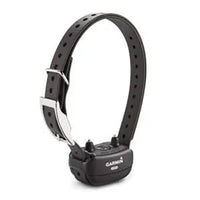 | Garmin BarkLimiter Deluxe — $129.99 | Vibration setting before static | Autorise, Manual, Vibration settings; level count not stated on the listing | Yes | AutoRise climbs only as far as needed; min weight not stated — check the listing | View Garmin BarkLimiter Deluxe on PetsTEK → |
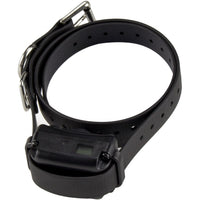 | E-Collar BP-504 Barkless Pro — $109.99 | Tone-Only mode (no static) | 9 levels per features summary, 8 per body copy — listing disagrees with itself; Auto / Tone-Only / Manual modes, bark counter | Yes | Smallest-dog pick here (5 lbs+); track progress by bark count | View E-Collar BP-504 Barkless Pro on PetsTEK → |
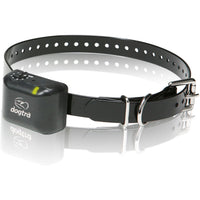 | Dogtra YS300 — $84.99 | Pager vibration warning before stim | 6 levels, low to medium, plus pager vibration; sound-recognition sensor | Yes | Cheapest real bark collar here; 10 lbs+; vibrate-only option | View Dogtra YS300 on PetsTEK → |
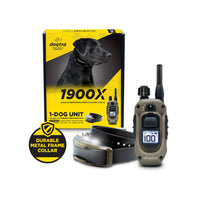 | Dogtra 1900X — $254.99 | Dial remote, low-high output | 100 levels; Nick, Continuous, XPP vibration, Tone, Boost | Yes | Strong-dog system; 35 lbs+, neck 13″+; dial keeps levels consistent by feel | View Dogtra 1900X on PetsTEK → |
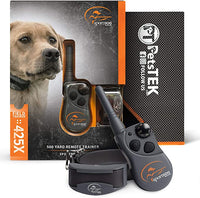 | SportDOG FieldTrainer 425X — $154.99 | Tone + Pager vibration first | 21 levels; Nick, Constant, Tone, Pager vibration | Yes | 8 lbs+; cheapest remote trainer here; expands to up to 3 dogs | View SportDOG FieldTrainer 425X on PetsTEK → |
Table note: A stim number is NOT comparable across brands — the ET-300’s 100 levels, the 425X’s 21, and the YS300’s 6 are different scales. Compare whether you can start with tone or vibration alone, how finely you can find the lowest noticed level, and whether the collar escalates gradually instead of jumping. Advertised range is line-of-sight best case — hills, trees, and buildings cut real-world range. Prices checked against live PetsTEK on November 2, 2026 — click through for the current price and stock. Source: petstek.com live listings.
The Picks in Detail
Mini Educator ET-300 — Best Tone-First System ($199.99)
The ET-300 leads this page because its control is the finest here and its tone is trainable as the cue itself: 100 levels of blunt pulse with Nick, Continuous, Vibration, Pavlovian tone, and Boost 1–60, plus customizable contact points. Pair tone with the command on the long line until the dog answers tone alone, and stim becomes a rarely used backup — which is exactly the humane-use shape described above. Range is 1/2 mile, and it fits small, medium, and large dogs. Its honest limit is range, not gentleness: a dog that needs help beyond 1/2 mile needs the 1900X below.
Choose if: you want to train tone-first, you want the finest level control, or you want a system where stim can stay a backup. Who should skip it: owners whose dog needs help beyond 1/2 mile — buy range once with the 1900X instead of outgrowing this one.
Garmin BarkLimiter Deluxe — The Gentlest Start for Barking ($129.99)
Dual-criterion verdict, stated up front: this page judges every pick on effectiveness and on safety, and the BarkLimiter wins on safety for barking. Its vibration setting lets you start with no static at all, and AutoRise begins at the lowest level and climbs only as far as the barking requires — the collar escalates, you do not. The honest gaps: the PetsTEK listing does not state a minimum weight or a total static level count, and this page does not invent either — check the listing before buying for a very small dog.
Choose if: barking is the problem, you are uneasy about static, or you want vibration to do the work. Who should skip it: owners who want a fixed manual level they set themselves, or a remote trainer for commands beyond barking.
E-Collar BP-504 Barkless Pro — Tone-Only Mode, Smallest Dogs ($109.99)
The BP-504 takes dogs from 5 pounds up — the lowest floor on this page — and it is the only pick here with a bark counter, which turns progress from a feeling into a number. Its Tone-Only mode works with no static at all, which makes it the cleanest no-shock bark option in this table. One honest flag: the PetsTEK listing disagrees with itself on level count — the features summary says 9 static levels, the body copy says 8. This page reports the discrepancy rather than picking a number silently.
Choose if: you want a Tone-Only bark collar, you have a toy or small breed, or you want to track barks per day. Who should skip it: owners who want dual sound-plus-vibration detection — for that, see the barking guide’s SBC-R discussion, and check its current stock before relying on it.
Dogtra YS300 — Small-Dog Bark Collar, Vibration First ($84.99)
The YS300 is the cheapest real bark collar on this page and the small-dog pick: 10 pounds and up, 6 low-to-medium levels, a sound-recognition sensor built to tell your dog’s bark from surrounding noise, and a pager vibration that can warn before any stimulation — set it to vibrate-only and you have a no-static bark collar. Its honest limit is power: a large, loud, persistent barker will outgrow 6 low-to-medium levels, and this is not the collar for that dog.
Choose if: barking is the problem, your dog is small or medium, or budget matters and you want a vibrate-first option. Who should skip it: large dogs over 35 pounds, and multi-dog households where another dog’s barking could still confuse a sound-based sensor.
Dogtra 1900X — The Strong-Dog Contrast Case ($254.99)
The 1900X is here as the contrast that proves the test: a strong-dog system is not automatically a cruel one, and a weak system is not automatically a kind one. What keeps a strong dog’s working level low is fine control and a consistent remote — and the 1900X has both: 100 levels, low-high output, and a dial remote you can adjust by feel mid-session, in a robust receiver for dogs 35 pounds and up with 13-inch-plus necks. A strong dog corrected at a guessed high level on a coarse system is worse off than the same dog corrected at a precisely found low level on this one. Its honest limit is the floor: a small dog under 35 pounds is a bad match for this receiver.
Choose if: your dog is 35 pounds or more, you want low-high output, or you want a dial remote you can use without looking. Who should skip it: owners of a small dog — fit the smaller dog first, with the ET-300 or a small-dog guide pick.
SportDOG FieldTrainer 425X — Best Value, Tone and Vibration First ($154.99)
The 425X is the cheapest remote trainer on this page: 500 yards, 21 levels, Nick and Constant static, Tone, and Pager vibration, expandable to three dogs, for dogs 8 pounds and up. Start with tone and pager vibration, pair them with the command and a reward, and many dogs never need stim at all — PetsTEK reviews for this collar repeatedly report owners ending up on tone or vibration alone. Its honest limit is range and receiver toughness: a very rough, hard-charging dog will wear the 1900X’s build better, and a dog that needs help beyond 500 yards needs more range.
Choose if: budget matters, your dog works in yards, parks, and fields under 500 yards, or this is your first collar and you want to start tone-first. Who should skip it: owners who need 3/4 mile or a full mile of range, or who want the toughest receiver on this page.
When NOT to Use One — and What to Try Instead
- If your dog has not learned the command yet — teach it on a long line first, one behavior at a time.
- If your dog is fearful or anxious — see a vet or behaviorist first; a correction on a frightened dog can make the fear worse.
- If your dog is under 6 months old — positive reinforcement first.
- If the problem is separation anxiety, fear, or pain — vet or behaviorist first; no collar fixes any of those.
- If the dog yelps, freezes, or shuts down — the level is too high or the dog is not ready. Stop and go back a step.
- If the problem is really motivation — a boring reward, sessions that run too long, or inconsistent rules — fix those first.
Alternatives that are often the right first move: higher-value rewards and shorter sessions; long-line training with staged distractions; a vibration-only or tone-only approach for a sensitive dog; more exercise and enrichment for a bored dog; and a professional trainer or behaviorist for fear, aggression, or separation anxiety.
Free PDF: The 7-Day E-Collar Training Plan
Day 1 is fit + beep-only conditioning. Vibrate comes on Days 2–3. Low-stim recall on Days 4–5. Proofing on Days 6–7. If you are still deciding whether a collar is right for your dog at all, start here instead of buying: the plan’s first three days use no stimulation at all, and they will tell you more about your dog than any product page can.
Frequently Asked Questions
Are shock collars cruel?
It depends on how they are used, not on the tool alone. At a low working level found at home, on a command the dog already knows, with correct timing, a fitted collar, a wear-time cap, and rewards alongside, a training collar is a communication tool. At high levels, as punishment after the fact, on a fearful or anxious dog, on a puppy under 6 months, on a dog that never learned the command, or left on all day, it is harmful — and that use should stop. The research most often cited — Cooper et al. (2014) and Schilder & van der Borg (2003) — points the same way: timing and level matter more than the device itself.
Does a shock collar hurt the dog?
At a low working level, the sensation is a mild, brief tingle — try the collar on your own hand first, at the lowest level, before you fit it to the dog, so you know exactly what the dog feels. At a high level, it hurts, and a dog that yelps, freezes, or shuts down is telling you the level is too high or the dog is not ready. Pain is not a training plan: if the dog is in pain, stop, go back a step, and get professional help if you are unsure.
What do Cooper et al. (2014) and Schilder & van der Borg (2003) actually show?
Cooper et al. (2014, PLoS ONE) found more stress-related behaviors and less optimistic behavior in dogs trained with e-collars than in dogs trained with positive reinforcement, even with experienced trainers. Schilder & van der Borg (2003) found stress behaviors associated with shock delivery, particularly when timing was poor or the dog did not understand what was being asked. Neither study proves every low-level use harms every dog, and neither isolates a single low-level correction from the training method around it — but both say the same thing this page says: timing, level, and whether the dog understands the command are what decide the welfare outcome.
Are shock collars banned anywhere?
Yes, in some places — and the picture is contested and changing, so check your own jurisdiction before buying; this page is not legal advice. Electronic collars have been banned in Wales since 2010. England’s planned ban, laid in 2023 with a February 2024 start date, did not take effect as planned, and public reporting since then has conflicted about its status. If a collar is prohibited where you live, use the vibration-only and tone-only route instead — the YS300’s pager vibration and the BP-504’s Tone-Only mode both work with no static — or a trainer-led positive-reinforcement program.
Is there a version that does not shock at all?
Yes. Several collars on this page work with no static: set the Dogtra YS300 to vibrate-only, use the E-Collar BP-504’s Tone-Only mode, or start the Garmin BarkLimiter Deluxe on its vibration setting. Many dogs answer tone or vibration alone once it is paired with a command and a reward. Try a no-static mode for two weeks before you ever touch a stim level — and if the dog answers it, you never need to.
At what age can a puppy start with a training collar?
Most makers set a 6-month minimum age, and every collar has a minimum weight as well — 5, 8, 10, or 35 pounds across the collars on this page. A puppy under 6 months is not a collar candidate; positive reinforcement and management come first, and a young puppy’s behavior is usually normal development, not a habit to correct.
My dog only obeys with the collar on. Is that cruel?
Not necessarily cruel, but it is a training failure called collar-smart behavior: the dog has learned to obey the collar, not the command. The fix is not a stronger collar — it is to pair tone with your voice command from the start, use tone alone more and more, and mix collar-on and collar-off sessions on a long line as the command improves. If the dog already only obeys with the collar on, go back a step and rebuild the command on the long line without the collar.
Related Guides
- Best Shock Collar for Dogs
- How to Use a Training Collar Safely
- E-Collar vs Shock Collar
- Best Shock Collar for Barking
- Best Shock Collar for Stubborn Dogs
- Best Shock Collar for Dogs That Run Away
- Best Shock Collar for Large Dogs
- Best Shock Collar for Thick Fur
- Best Shock Collar for 2 Dogs
- Shock Collar for Dogs: The Complete Guide
- Shock Collar for Small Dogs
- Dogtra vs E-Collar Technologies
- Garmin vs PetSafe vs SportDOG
- Start at the homepage
This site is by PetsTEK. The collars above are products we sell — this page is written to help you decide honestly whether a collar is right for your dog, including when the answer is “not yet,” “not this collar,” or “not without a trainer.” Prices and stock were checked against live PetsTEK listings on November 2, 2026 and can change — the listing is always the final word. We do not claim hands-on welfare testing we did not do: the research summary reports published studies and professional positions, and the picks are judged on verified specs.