By the PetsTEK Training Team · Updated November 2026

This site is by PetsTEK, the dog training gear store. The collars below are products we sell — and this page is the one where we list what can go wrong with them, because a buyer who knows the risks is a buyer who uses the tool safely. Every price and spec below was checked against live PetsTEK listings on November 3, 2026 — click through for the current price and stock. We have not hands-on tested these collars for safety outcomes ourselves; the risk picture below comes from maker manuals and guides we have studied, published research summarized briefly, and professional guidance, and the picks are judged on verified safety features — level locks, auto shutoffs, tone/vibration-first modes, and sensible wear caps — not on claimed testing. The short version: a training collar used at a low working level, fitted correctly, rotated regularly, and removed within the maker’s wear cap is a low-risk tool. The same collar fitted loosely, left on all day, or used at a guessed high level is not. Safety here is mostly a matter of fit, time, and level — three things you control completely.
Yes, with rules — and the rules matter more than the brand. The most common real injury from training collars is not a burn: it is skin irritation or sores where the contact points sit against the neck too long in one spot, and it is prevented by fitting correctly, rotating the collar every 2 hours, and never exceeding the maker’s wear cap (8 hours a day for Dogtra and Educator systems, 10 hours for the SportDOG 425X). The second risk is behavioral, not physical: a correction at the wrong level, at the wrong moment, or on a dog that never learned the command can frighten or shut down a dog — which is why the working level is found at home at the bottom of the scale, and why tone and vibration come first. The third risk is the wrong dog: puppies under 6 months, dogs below a collar’s minimum weight, and fearful or anxious dogs should not be collar candidates at all without professional guidance. Buy a collar with a level lock, a continuous-stimulation auto shutoff, and a tone or vibration mode, test every level on your own hand first, and stop at the first sign of redness, yelping, freezing, or shutdown. If you are unsure whether your dog is a candidate, ask a professional trainer, behaviorist, or your vet before you buy.
“Safety” questions about shock collars usually hide three different worries, and each has a different answer. The first is physical: can the device itself injure my dog? The second is behavioral: can it damage my dog’s confidence or trust? The third is practical: can I, a first-time owner, actually use it without making a mistake? The physical answer is the most reassuring of the three — the stimulation at a working level is a mild, brief tingle, and the injuries that do occur are almost always pressure and time injuries, not electrical ones. The behavioral answer is more serious, and it is covered in full on our cruelty page: timing and level decide the outcome, and poor timing harms dogs. The practical answer is the reason this page exists: every risk below comes with a concrete prevention step, and the safest collar is the one whose safety features cover your most likely mistake. A level lock covers the bumped dial. An auto shutoff covers the stuck button. A tone-first mode covers the urge to start too high. Buy the features that cover your mistakes, follow the wear rules, and the risk profile of a training collar drops to something ordinary — closer to a harness left on too long than to the horror stories.
The Five Safety Questions to Answer Before You Buy
- Does it fit this dog? Both contact points must touch skin, high on the neck behind the ears, snug enough that the receiver does not slide — makers describe a two-finger gap under the strap for Dogtra systems, while some PetSafe guides describe a one-finger check, so follow your collar’s own manual, not a generic rule. A loose collar that slides corrects inconsistently and chafes; a collar so tight it dents the skin is a pressure injury waiting to happen. Long or thick coats may need longer contact points or a light trim so the points reach skin without cranking the strap tighter.
- Will it stay on too long? Dogtra and Educator maker guidance caps wear at 8 hours a day; the SportDOG 425X guidance caps it at 10 hours. Rotate the collar’s position every 2 hours, check the skin daily, and take it off overnight and whenever training is done. No collar is meant to live on the dog, and every “my dog got sores” story we have seen traces back to wear time, not stimulation.
- Can I control the level precisely? A 100-level scale (ET-300, 1900X) lets you find the lowest noticed level exactly; a 15- or 21-level scale (PetSafe 900, 425X) is coarser but simpler to learn. Either is safe if you start at the bottom and work up to the first mild reaction — an ear flick, a head turn, a brief pause — and never copy a level from another owner or another brand. Level numbers are not comparable across brands.
- Does it protect against my mistakes? Look for a level lock (so a bumped dial cannot jump the level), a continuous-stimulation auto shutoff (Dogtra systems stop continuous stimulation after 12 seconds), and a tone or vibration mode you can use instead of static. These three features are the safety case for every pick in the table below.
- Is this dog a candidate? Puppies under 6 months are not candidates — every maker in this guide sets that floor. Neither is a dog below the collar’s minimum weight, a dog with a skin condition or neck injury, or a fearful or anxious dog. When in doubt, a vet, trainer, or behaviorist answers this question better than any product page, including this one.
The Real Risks, Honestly Stated
- Skin irritation and pressure sores — the most common real injury. The sores sometimes photographed and called “burns” are, in maker troubleshooting guidance, pressure injuries: contact points pressed into the same spot for too long, sometimes with dirt or moisture trapped underneath. Prevention is unglamorous and complete: correct fit, rotation every 2 hours, daily skin checks, clean contact points, and the wear cap. Stop at the first redness and let the skin heal fully before restarting; if irritation persists, see your vet.
- Wrong level, wrong moment — the behavioral risk. A correction far above the working level, or one that lands after the behavior ended, or while you are angry, can frighten a dog, shut it down, or escalate frustration into aggression. Cooper et al. (2014) found more stress-related behaviors in e-collar-trained dogs than in positively reinforced dogs, and Schilder & van der Borg (2003) found stress behaviors linked to shock delivery especially when timing was poor — the full discussion, including the limits of both studies, is on our cruelty page. The prevention is the working-level rule and the calm-handler rule, both covered in our safe-use guide.
- The wrong dog. A puppy under 6 months, a dog under the minimum weight, a fearful dog, a dog in pain, or a dog whose problem is separation anxiety will not be helped by a collar and may be harmed by one. This is the risk no safety feature fixes — it is fixed by not buying, or by getting professional guidance first.
- Cheap, no-name collars. Unbranded collars with coarse or inconsistent output, no level lock, no auto shutoff, and no maker support are where the genuine electrical horror stories come from. Every collar on this page comes from Dogtra, E-Collar Technologies, Garmin, PetSafe, or SportDOG, sold by PetsTEK as an authorized retailer, with manuals and support behind it. A bargain collar with no brand behind it is not a bargain.
- Water and battery care. A collar rated waterproof still needs its charging port plugs replaced after charging, and salt water rinsed off with fresh water — both are in the maker guidance. A collar that will not hold a charge, has a damaged charging pin, or shows a swollen battery should not be used; contact the maker or retailer instead of improvising a fix. Never charge a collar while it is on the dog.
The Safety Rules (Tape These to the Fridge)
- Fit it high behind the ears, both contact points on skin, strap snug per your collar’s manual — two-finger gap for Dogtra systems, one-finger check in some PetSafe guides.
- Rotate the collar’s position every 2 hours.
- Never exceed the wear cap: 8 hours a day for Dogtra and Educator systems, 10 hours for the SportDOG 425X. Off overnight, off when training is done.
- Check the neck skin every day. Redness, sores, or hair loss means stop, let it heal, and refit before restarting.
- Find the working level at home, at the bottom of the scale. Test every level on your own hand first.
- Lock the level once found, so a bumped dial cannot change it mid-session.
- Tone or vibration first, every session. Static is the backup, not the daily cue.
- One behavior at a time, one known command, while you are calm. If you missed the moment, let it go.
- Never use a collar on a puppy under 6 months, a dog below the minimum weight, or a dog you have not taught the command to.
- Keep contact points clean, replace charging-port plugs after charging, and rinse after salt water.
Dogs Who Should Not Use One — and Who to Ask Instead
- Puppies under 6 months: positive reinforcement and management first; a young puppy’s behavior is usually normal development.
- Dogs below the collar’s minimum weight or neck size: a receiver too heavy or too strong for a small dog is a welfare problem, not a bargain — see our small-dogs guide for the right fit.
- Fearful, anxious, or aggressive dogs: a correction on a frightened dog can make the fear worse. See a vet or behaviorist first.
- Dogs with skin conditions, neck injuries, or recovering from surgery: ask your vet first.
- Dogs whose problem is separation anxiety, fear, or pain: those are vet-or-behaviorist problems first, never collar problems first.
- If any of these describes your dog, the honest next step is a professional, not a product page. A trainer or behaviorist will tell you plainly if your dog is not a collar candidate at all — and that answer saves you money as well as risk.
Buying a Safe Collar: The Features That Matter
- A level lock. The single most useful safety feature for a first-time owner: once the working level is found, lock it.
- A continuous-stimulation auto shutoff. Dogtra systems stop continuous stimulation after 12 seconds; other makers cap continuous output similarly — check your model’s manual for its number.
- Tone and vibration modes. A collar that can do the whole job on tone or vibration gives you a no-static path, and a warning step before any static.
- Fine level control. More levels mean a smaller jump between “noticed” and “too much” — 100 levels (ET-300, 1900X) is the finest here; 15–21 levels is simpler to learn.
- Contact-point options. Longer points for thick coats, shorter points for short coats, and hypoallergenic options for sensitive skin (titanium points are described as hypoallergenic in maker guidance; note that standard points may contain nickel).
- Waterproofing you can trust. A dog that swims needs a genuinely waterproof receiver, not a splash-resistant one — the 425X’s DryTek build and the waterproof ratings on the other picks here are maker-stated.
- A real maker behind it. Dogtra, E-Collar Technologies, Garmin, PetSafe, and SportDOG all publish manuals, answer support queries, and honor warranties. That support line is a safety feature too.
The Six Safest Systems: What Protects You From What
| Your worry | Pick | Why it answers it |
|---|---|---|
| “I’ll bump the dial by accident” | Mini Educator ET-300 | Level lock + 100 fine levels + Pavlovian tone |
| “I’ll hold the button too long” | Dogtra 1900X | 12-second continuous auto shutoff + level lock + dial remote |
| “I want the simplest safe system” | PetSafe 900 Yard | Safety lock + simple 15-level scale + wide neck fit |
| “I want tone and vibration first” | SportDOG FieldTrainer 425X | Tone + Pager vibration, DryTek waterproof, 21 levels |
| “Barking, and I’m uneasy about static” | Garmin BarkLimiter Deluxe | Vibration setting first, AutoRise climbs only as needed |
| “Smallest dog, no-static option” | E-Collar BP-504 Barkless Pro | Tone-Only mode, 5 lbs+, bark counter tracks progress |
The Six Collars Compared
| Collar | Safety features | Stim Levels & Modes | Shock Function | Safe-use fit | Check price | |
|---|---|---|---|---|---|---|
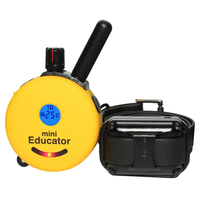 | Mini Educator ET-300 — $199.99 | Level lock; customizable contact points; waterproof | 100 levels; Nick, Continuous, Vibration, Pavlovian tone, Boost 1–60 | Yes | Finest control here; fits small, medium, and large dogs; 8-hour wear cap | View Mini Educator ET-300 on PetsTEK → |
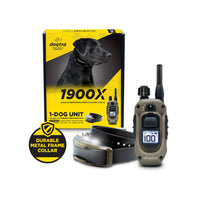 | Dogtra 1900X — $254.99 | Level lock; 12-second continuous auto shutoff; rotate every 2 hours | 100 levels; Nick, Continuous, XPP vibration, Tone, Boost | Yes | Strong-dog system; 35 lbs+, neck 13″+; 8-hour wear cap | View Dogtra 1900X on PetsTEK → |
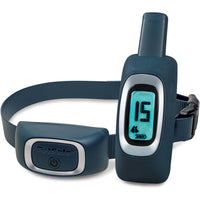 | PetSafe 900 Yard Remote Trainer — $199.95 | Safety lock; simple scale, hard to mis-set; waterproof | 15 levels; Tone, Vibration, Static | Yes | 8 lbs+, neck 6″–27″; expands to 2 dogs; beginner-friendly | View PetSafe 900 Yard on PetsTEK → |
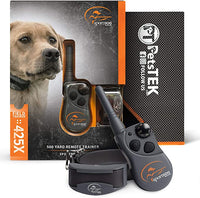 | SportDOG FieldTrainer 425X — $154.99 | Tone + Pager vibration first; DryTek waterproof build | 21 levels; Nick, Constant, Tone, Pager vibration | Yes | 8 lbs+; 10-hour wear cap; expands to up to 3 dogs | View SportDOG FieldTrainer 425X on PetsTEK → |
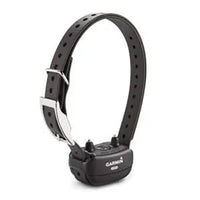 | Garmin BarkLimiter Deluxe — $129.99 | Vibration setting first; AutoRise starts low, climbs only as needed | AutoRise, Manual, Vibration settings; level count not stated on the listing | Yes | Barking pick; min weight not stated — check the listing | View Garmin BarkLimiter Deluxe on PetsTEK → |
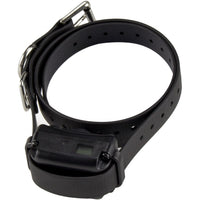 | E-Collar BP-504 Barkless Pro — $109.99 | Tone-Only mode (no static); bark counter | 9 levels per features summary, 8 per body copy — listing disagrees with itself; Auto / Tone-Only / Manual modes | Yes | Smallest-dog pick here (5 lbs+); track whether corrections are falling | View E-Collar BP-504 Barkless Pro on PetsTEK → |
A stim number is NOT comparable across brands — the ET-300’s 100 levels, the 425X’s 21, and the PetSafe 900’s 15 are different scales. Compare safety features instead: level lock, auto shutoff, tone/vibration-first modes, and a wear cap you will actually follow. Advertised range is line-of-sight best case — hills, trees, and buildings cut real-world range. Prices checked against live PetsTEK on November 3, 2026 — click through for the current price and stock. Source: petstek.com live listings.
Shop the range of remote training collars on PetsTEK →
The Picks in Detail
Mini Educator ET-300 — Best Safety Feature Set ($199.99)
Level lock, 100 levels, customizable contact points, Pavlovian tone as the cue itself so static stays a backup. Range 1/2 mile, fits small, medium, and large dogs, waterproof. Honest limit is range, not safety: a dog needing help beyond 1/2 mile needs the 1900X. Choose if: you want a level lock, the finest level control, or a tone-first system. Who should skip it: owners whose dog needs help beyond 1/2 mile. View Mini Educator ET-300 on PetsTEK →
Dogtra 1900X — The Auto-Shutoff Pick for Strong Dogs ($254.99)
Robust receiver for dogs 35 lbs+ with 13″+ necks, dial remote by feel, continuous stimulation stops automatically after 12 seconds, level lock. Maker guidance: rotate every 2 hours, never more than 8 hours a day. Range 3/4 mile, 100 levels Nick/Continuous/XPP vibration/Tone/Boost. Honest limit is the floor: a small dog under 35 lbs is a bad match. Choose if: your dog is 35 lbs+, you want the 12-second auto shutoff, or a dial remote. Who should skip it: owners of a small dog. View Dogtra 1900X on PetsTEK →
PetSafe 900 Yard Remote Trainer — The Simplest Safe System ($199.95)
900 yards, simple 15-level scale of Tone/Vibration/Static, safety lock, neck fit 6–27 inches, 8 lbs+, expands to 2 dogs, waterproof. Honest limit is fineness: a very sensitive dog whose working level falls between two of the 15 steps is better served by the ET-300’s 100. Choose if: this is your first collar, you want the simplest controls, or your dog works under 900 yards. Who should skip it: owners needing very fine level differences or a full mile of range. View PetSafe 900 Yard on PetsTEK →
SportDOG FieldTrainer 425X — Best Value, Tone and Vibration First ($154.99)
500 yards, 21 levels, Nick/Constant/Tone/Pager vibration, expands to 3 dogs, 8 lbs+, DryTek waterproof build. Maker guidance caps wear at 10 hours a day — still a cap: off overnight, off when training is done, rotated regularly. Honest limit is range and receiver toughness. Choose if: budget matters, your dog works under 500 yards, or this is your first collar and you want tone-first. Who should skip it: owners needing 3/4 mile or a full mile, or the toughest receiver. View SportDOG FieldTrainer 425X on PetsTEK →
Garmin BarkLimiter Deluxe — The Safest Start for Barking ($129.99)
Vibration setting first, AutoRise begins at the lowest level and climbs only as far as barking requires — removes starting too high and hand-escalation in frustration. Honest gaps: listing states no minimum weight or total static level count — do not invent them. Choose if: barking is the problem, you are uneasy about static, or you want vibration to do the work. Who should skip it: owners wanting a fixed manual level, or a remote trainer for commands beyond barking. View Garmin BarkLimiter Deluxe on PetsTEK →
E-Collar BP-504 Barkless Pro — Tone-Only Mode, Smallest Dogs ($109.99)
5 lbs+, bark counter turning progress into a number, Tone-Only mode with no static. Honest flag: listing disagrees with itself on level count (9 per features summary, 8 per body copy) — report the discrepancy. Choose if: you want a Tone-Only bark collar, have a toy/small breed, or want to track barks per day. Who should skip it: owners wanting dual sound-plus-vibration detection — for that, see the barking guide’s SBC-R discussion, and check its current stock before relying on it. View E-Collar BP-504 Barkless Pro on PetsTEK →
Stop Immediately If You See Any of These
- Redness, sores, or hair loss under the contact points — remove the collar, let the skin heal fully, refit before restarting; see your vet if it persists.
- Yelping, freezing, or shutting down during a session — the level is too high or the dog is not ready. Stop, go back a step, and get professional help if unsure.
- Escalating fear or aggression — a dog that gets worse over two weeks of careful use is telling you the tool, the timing, or the diagnosis is wrong. Stop and get professional help.
- A collar that will not hold a charge, has a damaged charging pin, or shows a swollen battery — stop using it and contact the maker or retailer.
- A dog that only obeys with the collar on — not an emergency, but a training failure called collar-smart behavior. Go back a step and rebuild the command on the long line without the collar.
Free PDF: The 7-Day E-Collar Training Plan
Day 1 is fit + beep-only conditioning. Vibrate comes on Days 2–3. Low-stim recall on Days 4–5. Proofing on Days 6–7. If you are still deciding whether a collar is safe for your dog at all, start here instead of buying: the plan’s first three days use no stimulation at all, and they will tell you more about your dog than any product page can.
Frequently Asked Questions
Are shock collars safe for dogs?
Used correctly, they are a low-risk tool — but “correctly” carries real weight. Fit the collar high behind the ears with both contact points on skin, rotate it every 2 hours, never exceed the maker’s wear cap (8 hours a day for Dogtra and Educator systems, 10 hours for the SportDOG 425X), find the working level at home at the bottom of the scale, and start with tone or vibration. The most common real injury is skin irritation from fit and wear time, not burns, and it is preventable. Puppies under 6 months, dogs below a collar’s minimum weight, and fearful or anxious dogs should not be collar candidates without professional guidance.
Can a shock collar burn my dog’s neck?
The sores sometimes called burns are usually pressure injuries, not electrical burns: contact points pressed into the same spot for too long, sometimes with dirt or moisture trapped underneath. Maker troubleshooting guidance treats them as fit and wear-time problems — too tight, left on too long, never rotated — and the fix is the same: correct fit, rotation every 2 hours, daily skin checks, and the wear cap. Stop at the first redness and let the skin heal fully before restarting; if irritation persists, see your vet.
How long can a dog wear a training collar?
Dogtra and Educator maker guidance caps wear at 8 hours a day; the SportDOG 425X guidance caps it at 10 hours. Rotate the collar’s position every 2 hours, check the skin daily, and take it off overnight and whenever training is done. No collar is meant to live on the dog — a collar left on around the clock is how most neck sores happen, regardless of brand.
What age can a puppy start with a training collar?
Most makers set a 6-month minimum age, and every collar has a minimum weight as well — 5, 8, or 35 pounds across the collars on this page. A puppy under 6 months is not a collar candidate; positive reinforcement and management come first, and a young puppy’s behavior is usually normal development, not a habit to correct.
What safety features should I look for?
Three matter most: a level lock, so a bumped dial cannot jump the level; a continuous-stimulation auto shutoff, so a stuck button cannot run on (Dogtra systems stop continuous stimulation after 12 seconds); and tone or vibration modes, so you can train without static at all. Add fine level control (100 levels beats 15 when the working level needs precision), contact-point options for the coat in front of you, genuine waterproofing for a dog that swims, and a real maker with manuals and support behind the product.
Should I ask my vet before using a training collar?
Yes, if your dog has a health condition, a skin condition, a neck injury, or is recovering from surgery — and always if your dog is fearful, anxious, or aggressive, or if the problem is separation anxiety, fear, or pain. A vet, trainer, or behaviorist will tell you plainly if your dog is not a collar candidate at all, and that answer is worth more than any product page.
Is a cheap no-name collar as safe as a brand-name one?
No — and this is the one place where price genuinely tracks safety. Unbranded collars with coarse or inconsistent output, no level lock, no auto shutoff, and no maker support are where the genuine electrical horror stories come from. Every collar on this page comes from Dogtra, E-Collar Technologies, Garmin, PetSafe, or SportDOG, sold by PetsTEK as an authorized retailer, with manuals, warranties, and support behind it. A bargain collar with no brand behind it is not a bargain.
Related Guides
- Are Shock Collars Cruel?
- How to Use a Training Collar Safely
- Best Shock Collar for Dogs
- E-Collar vs Shock Collar
- Best Shock Collar for Barking
- Best Shock Collar for Stubborn Dogs
- Best Shock Collar for Dogs That Run Away
- Best Shock Collar for Large Dogs
- Best Shock Collar for Thick Fur
- Best Shock Collar for 2 Dogs
- Shock Collar for Dogs: The Complete Guide
- Shock Collar for Small Dogs
- Dogtra vs E-Collar Technologies
- Garmin vs PetSafe vs SportDOG
- Start at the homepage
This site is by PetsTEK. The collars above are products we sell — this page is written to help you decide honestly whether a collar is safe for your dog, including when the answer is “not yet,” “not this collar,” or “not without a vet or trainer.” Prices and stock were checked against live PetsTEK listings on November 3, 2026 and can change — the listing is always the final word. We do not claim hands-on safety testing we did not do: the risk picture reports maker manuals and guides, published research summarized briefly, and professional guidance, and the picks are judged on verified safety features.