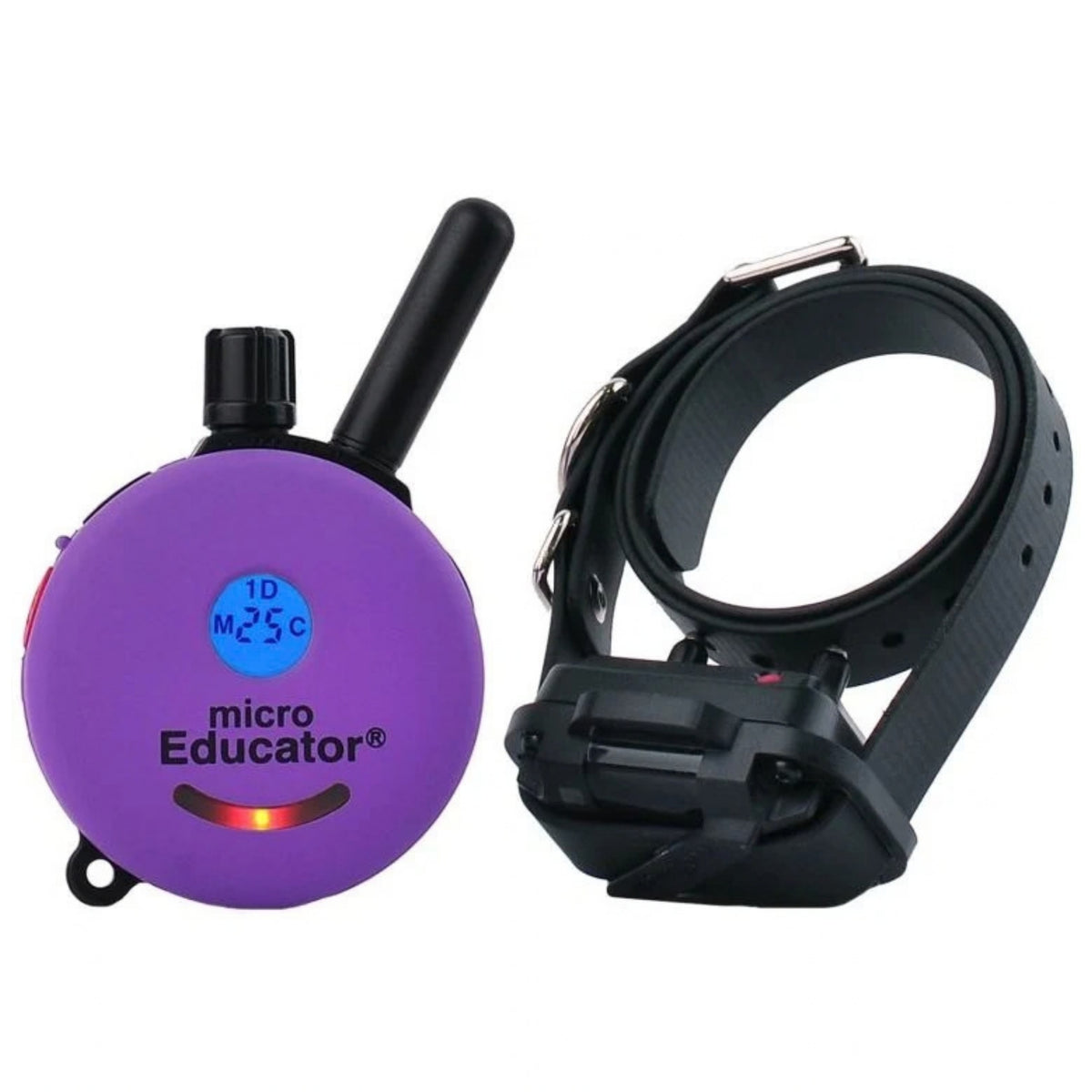
Yes, small dogs can use training collars — but not just any collar. A receiver built for a 70-lb Lab is too big, too heavy, and too strong for a 12-lb terrier. Small dogs need three things: a receiver sized for a small neck, a snug fit that keeps contact points on skin, and lower settings. Get those right and the same training rules apply as for any dog.
New to training collars? Start with the full guide: Shock Collar for Dogs: The Complete Guide.
What Counts as a “Small Dog” Here?
This guide is for dogs under about 25 lbs — Chihuahuas, Yorkies, Mini Dachshunds, Pomeranians, Toy Poodles, Shih Tzus, Maltese, and similar. Dogs in the 25–40 lb range (Beagles, Corgis, French Bulldogs) can usually use a standard small receiver, but the fit and settings advice here still applies.
Choosing a Collar for a Small Dog


1. Receiver size and weight. This is the deciding factor. Look for receivers marketed as small, compact, or mini. A heavy receiver bounces on a small neck, which breaks contact and makes stimulation inconsistent — the one thing you don’t want. If the receiver looks as wide as your dog’s neck, it’s too big.
2. Strap fit. The strap must cinch down small enough for a slim neck. Check the minimum neck size in the specs — if your dog’s neck is below it, the collar won’t fit no matter how good the electronics are.
3. Adjustable low levels. Small dogs usually work at very low stim levels. You want a collar with many fine-grained low levels (e.g., 0–100 or 1–127 scales), not one that jumps from “nothing” to “noticeable” in three steps. Beep and vibrate modes matter even more for small dogs — many never need stim at all.
4. Range. Small-dog training is usually backyard and neighborhood work. 300 or 500 yards is plenty. Don’t pay for a mile of range you’ll never use.
5. Waterproofing. Small dogs get wet the same as big ones. Fully waterproof, not water-resistant.
Fitting a Collar on a Small Dog

Fit is where small-dog training succeeds or fails. A loose collar on a small neck slides, loses contact, and delivers inconsistent stimulation.
- Position: High on the neck, just behind the ears. Not hanging low.
- Snugness: The two-finger rule — two fingers fit between strap and neck, no more. On small dogs, err toward the snug side of that rule, because a loose collar slides faster on a slim neck. (Some brands specify one finger instead — follow your collar’s manual.)
- Contact: Both contact points must touch skin. Small dogs often have fine fur that looks thin but still insulates. Part the fur and check. If the coat is dense, use the shorter contact points first — long points on a small dog can press too hard.
- Weight check: Watch the dog move with the collar on. If the receiver swings or rotates to one side when the dog shakes or runs, it’s too heavy or too loose.
- Rotation: Move the collar to a different spot on the neck every couple of hours. Small dogs have thinner skin — check for redness every time you take it off, and give rest days if you see any irritation.
- Max wear time: 8–10 hours, depending on the model. Off at night, always.
Settings for Small Dogs: Start Lower Than You Think
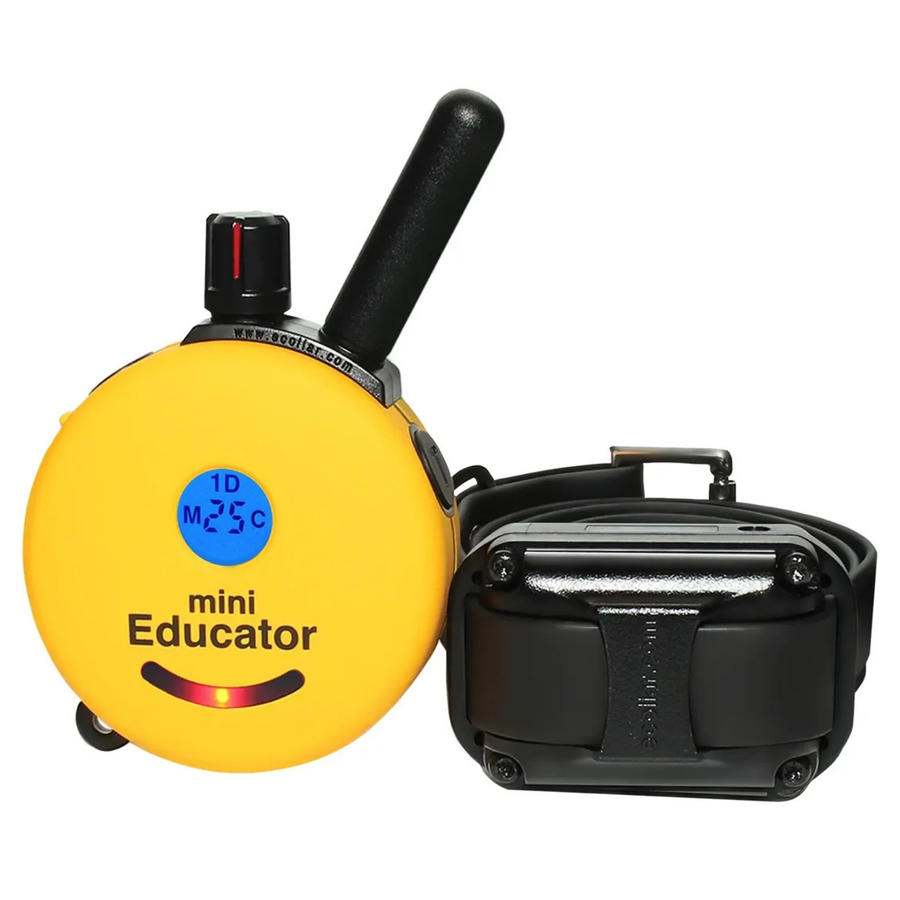
Small dogs are not just scaled-down big dogs — they tend to be more sensitive to stimulation, and their working level is usually very low. Never hold the stim button down — most collars cut off continuous stimulation after 10–12 seconds.
- Start with beep only. Many small dogs learn recall on beep alone. Give beep a real chance — a full week of conditioning — before even thinking about stim.
- Then vibrate. If beep isn’t enough, vibrate is the next step. For many small dogs, vibrate is the highest mode they ever need.
- Stim last, lowest level first. If you do use stim, find the working level the same way as any dog: start at level 1, go up one level at a time, and stop at the first mild reaction (ear flick, head turn). For small dogs this is often within the first few levels.
- Recheck every session. Sensitivity varies by day, coat condition, and distraction. Don’t assume yesterday’s level is today’s.
- If the dog yelps, freezes, or runs from you, stop. The level is too high or the dog isn’t ready. Go back to beep-only and rebuild.
Training Sequence for Small Dogs
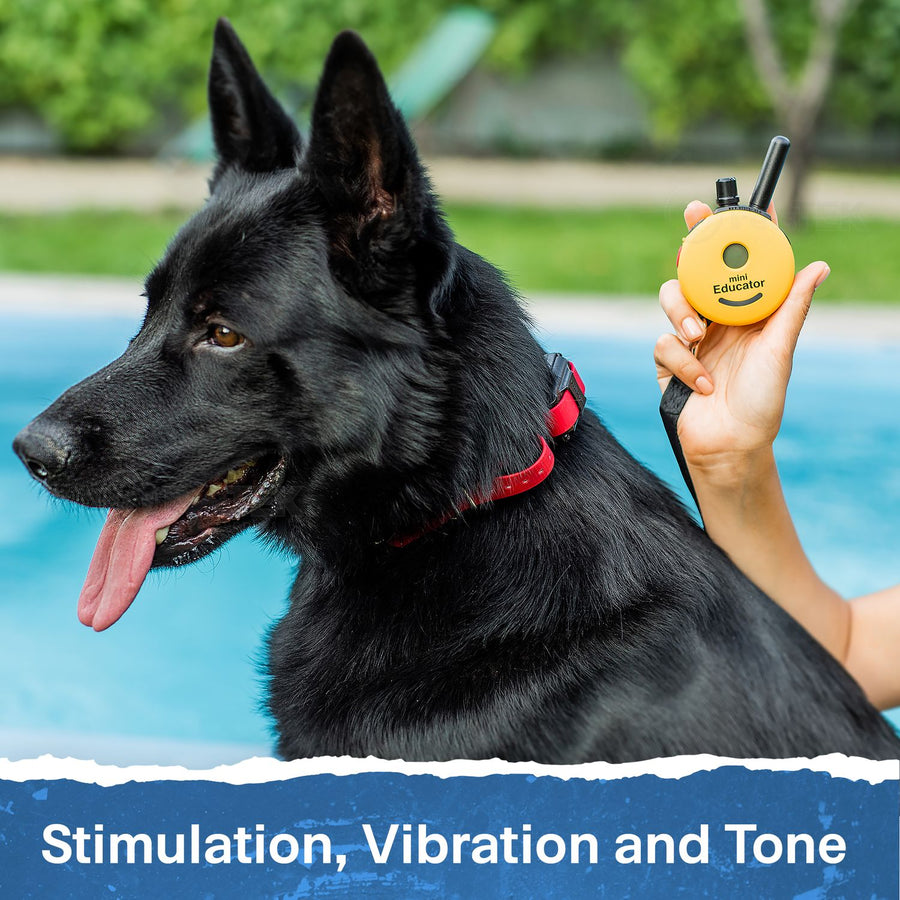
Same structure as the full guide, with small-dog adjustments:
Week 1 — Conditioning (no stim): Days 1–2: Collar on during normal play. No buttons. Let the dog forget it’s wearing it. Days 3–4: Beep conditioning — beep, then reward. Repeat until the dog perks up at the sound. Days 5–7: Known commands on-leash with beep as a marker.
Week 2 — Adding modes: Days 8–10: If needed, introduce vibrate paired with a known command. Stim only if vibrate isn’t enough — and only at the working level. Days 11–14: Short-distance practice in low-distraction settings. Small dogs are easily overwhelmed by big environments — train in a quiet yard before a busy park.
Free PDF: The 7-Day E-Collar Training Plan
The 7-Day E-Collar Training Plan (PDF) — day-by-day sessions, including what to do if your dog shuts down.
Collars That Suit Small Dogs
| Collar | Why it fits small dogs | Range | Stim Levels / Modes | Check price |
|---|---|---|---|---|
 Micro Educator ME-300 |
Built for the smallest dogs — 20% smaller, lighter receiver | 1/3 mile | 100 levels; Nick, Continuous, Vibration, Pavlovian tone, Boost (1–60) | View Micro Educator ME-300 on PetsTEK → |
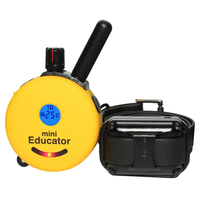 Mini Educator ET-300 |
Compact receiver, fine low levels | 1/2 mile | 100 levels; Nick, Continuous, Vibration, Pavlovian tone, Boost (1–60) | View Mini Educator ET-300 on PetsTEK → |
Frequently Asked Questions
Is a shock collar safe for a Chihuahua / Yorkie / other tiny dog?
Yes, with a collar sized for the dog and settings at the lowest working level. The risk isn’t the dog’s size — it’s the wrong collar or the wrong level. A receiver that’s too big and a level that’s too high are the problems, and both are avoidable.
What age can a small dog start?
Not before 6 months, and only after the dog knows basic commands. Small breeds mature on their own timeline — don’t rush it because the dog is small.
My small dog is scared of everything. Will a collar help?
No. A fearful dog needs confidence-building and possibly a professional trainer first. A collar on a fearful dog can make the fear worse.
Do small dogs need stim at all?
Often not. Beep and vibrate handle recall for many small dogs. Treat stim as a last resort, not the default.
How do I know the collar is too big?
The receiver swings when the dog moves, rotates to one side, or covers most of the neck width. If you can’t get a snug fit without the strap being fully cinched, the collar is too big for the dog.
Next Steps
- Full guide: Shock Collar for Dogs: The Complete Guide
- Free PDF: 7-Day E-Collar Training Plan
- Free PDF: How to Introduce Your Dog to a Training Collar
- Free PDF: Shock Collar Settings Explained: Beep, Vibrate, Stim
- Shop the range: Browse training collars on PetsTEK