
A shock collar — properly, a training collar or e-collar — is one of the most misunderstood tools in dog training. Used correctly, it is a low-level communication tool that reinforces commands your dog already knows. Used badly, it confuses and frightens them. This guide covers everything you need to make the right call: how to choose one, how to fit it, how to find the right setting, and how to train with it safely.
Short on time? Start with our quick overview on the Homepage, or jump straight to our Best Shock Collars for Dogs picks. This page is the full guide.
How to Choose a Training Collar
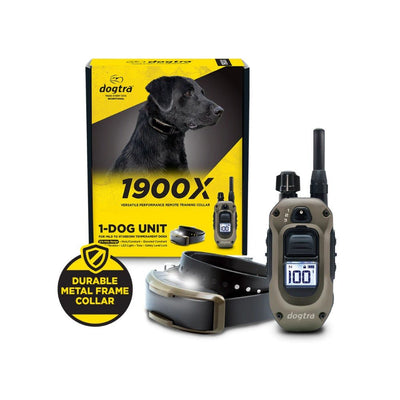
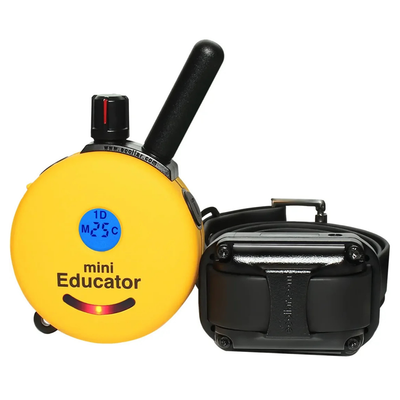
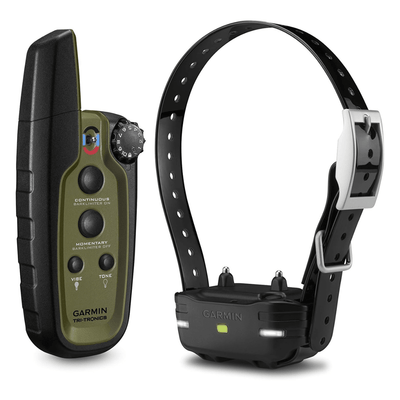
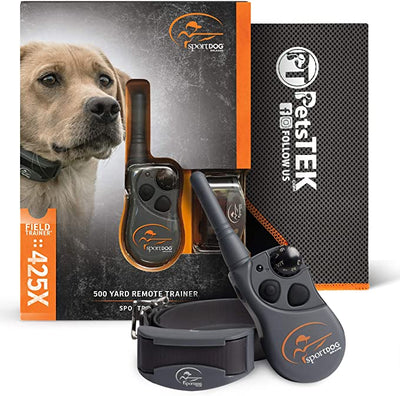
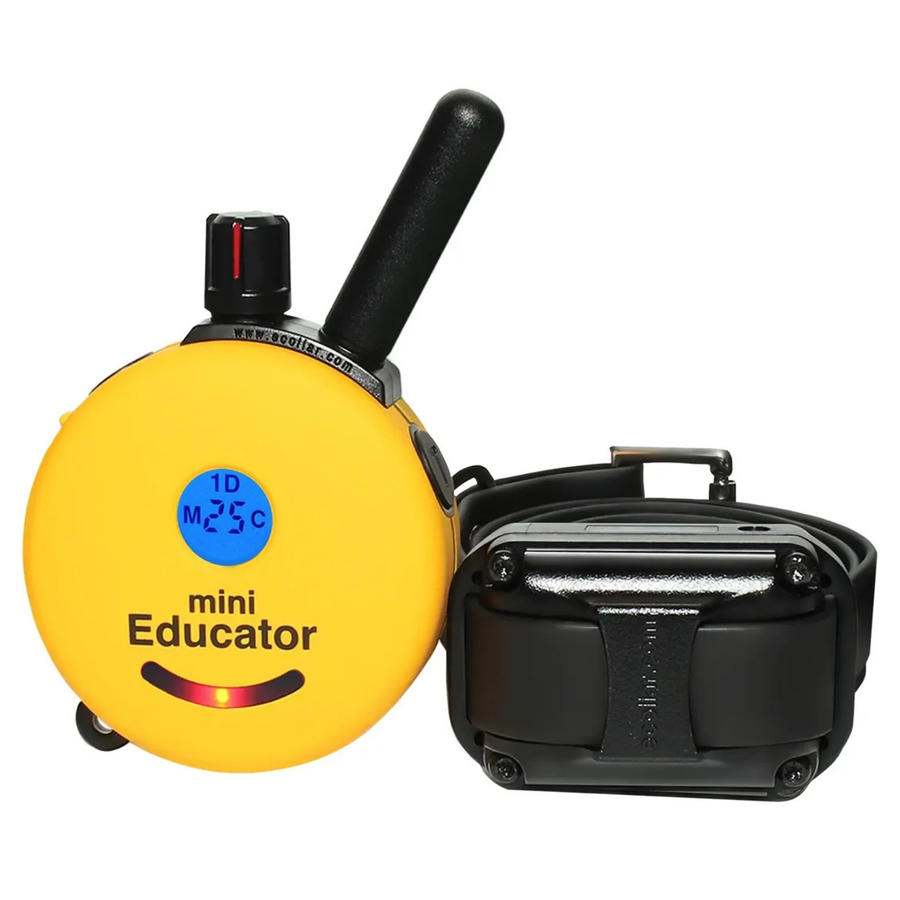
The four collars compared in this guide are pictured below: the Dogtra 1900X, Mini Educator ET-300, Garmin Sport PRO bundle, and SportDOG 425X.
By dog size
Small dogs (under 25 lbs): You need a small, light receiver and a strap that fits a slim neck. A big receiver bounces around on a small dog and the contact points may not sit right. See our dedicated guide: Shock Collar for Small Dogs.
Medium dogs (25–60 lbs): Most standard training collars fit well. Focus on range and features rather than receiver size.
Large dogs (60+ lbs): A standard receiver works, but you need enough range for the distances a big dog covers, and contact points long enough to reach skin through a thick coat.
By coat
Thick or double coats (Huskies, Shepherds, Doodles) need longer contact points so the stim reaches skin instead of getting lost in fur. Short coats work fine with standard contact points. If the collar seems inconsistent, the first thing to check is contact — part the fur and confirm both points touch skin.
By temperament
- Soft / sensitive dogs: Usually respond to beep and vibrate alone. If you use stim, the working level will be very low. Never start high with a soft dog.
- Confident / driven dogs: May need stim for reliable off-leash recall, especially around distractions like other dogs or wildlife.
- Fearful or reactive dogs: Do not start with a training collar. Work with a professional trainer first. A collar on a fearful dog can make the fear worse.
By training goal
- Backyard recall: 400–800 yards of range is plenty.
- Field, hunting, hiking: 3/4 mile to 1+ mile.
- Two dogs: Get a transmitter that supports a second receiver — buying two separate systems costs more.
- Swimming: The receiver must be fully waterproof, not water-resistant.
Fitting a Training Collar

Fit matters more than brand. A badly fitted collar is inconsistent — and inconsistent stimulation is the fastest way to confuse a dog.
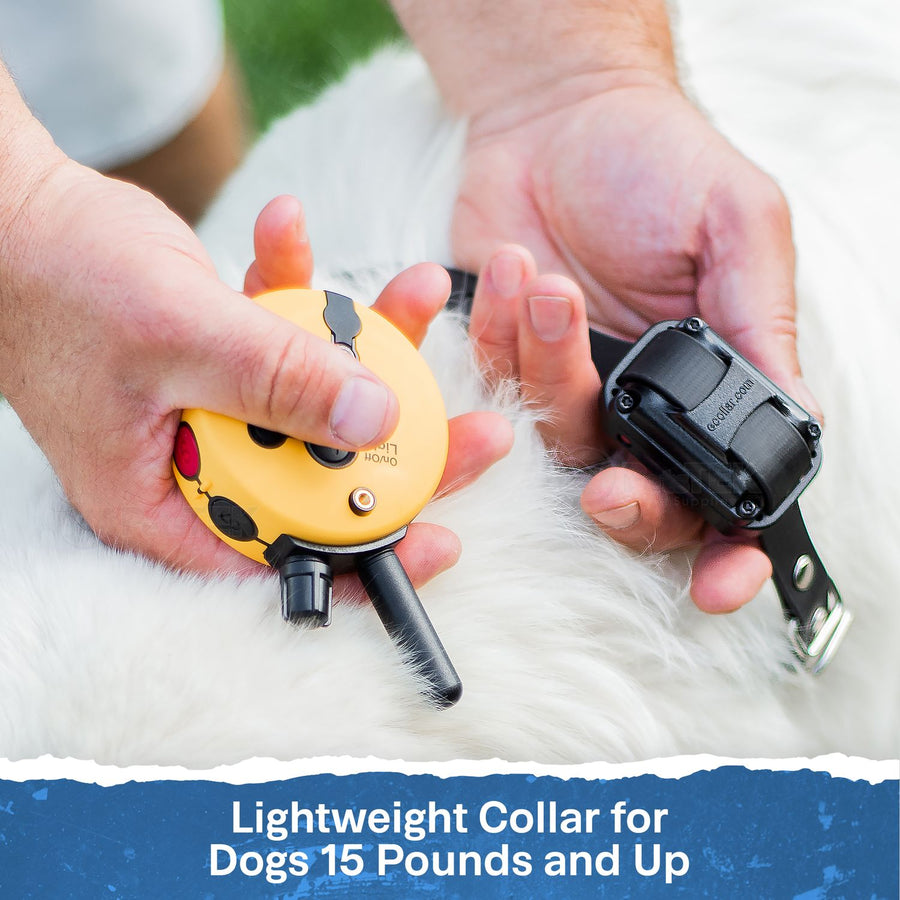
- Position: High on the neck, just behind the ears, with the receiver centered under the chin or on the side of the neck — not hanging low like a regular collar.
- Snugness: The two-finger rule — you should be able to fit two fingers between the strap and the neck, but no more. Too loose and the contact points bounce; too tight and it’s uncomfortable. (Some brands specify one finger instead — follow your collar’s manual.)
- Contact: Both contact points must touch skin. Part long fur if needed. If your dog has a very thick coat, use the longer contact points that come in the box.
- Rotation: Rotate the collar to a different spot on the neck every couple of hours, and don’t leave it on more than 8–10 hours, depending on the model. Constant pressure in one spot causes irritation — the most common beginner mistake.
- Check the skin: Every time you take it off, check for redness. If the skin is irritated, give it a rest day.
Finding the Right Setting: The Working Level
The working level is the lowest stim level your dog notices. Finding it takes two minutes:
- Start at level 1 with the dog standing calmly.
- Tap the stim button briefly. Watch for the subtlest reaction — an ear flick, a head turn, a pause. That’s it.
- If there’s no reaction, go up one level and repeat.
- The first level that gets a mild, curious reaction is the working level. Train at or just above it.
Rules: Never jump straight to a high level to “see what happens.” If the dog yelps, jumps, or cowers, the level is far too high. Go back to beep-only and start over lower. Working level varies by dog, by day, and by distraction level. Recheck it each session. Don’t assume yesterday’s level is today’s. Never hold the stim button down — most collars cut off continuous stimulation after 10‒12 seconds.
Mode order: Beep first. Vibrate second. Stim only when the first two don’t get a response to a known command. Most well-trained dogs end up working on beep alone for most situations.
The First Two Weeks: A Safe Training Sequence
Week 1 — Conditioning (no stim): Days 1–2: Dog wears the collar during normal play and training. No buttons pressed. The collar becomes boring. Days 3–4: Beep conditioning. Beep, then reward. Repeat until the dog perks up at the sound. Days 5–7: Practice known commands on-leash with beep as a marker. Beep → command → reward.
Week 2 — Adding stim: Days 8–10: Find the working level (see above). Pair low stim with a known command — e.g., stim + “come” — and reward the correct response. Days 11–14: Gradual distance. Practice in low-distraction settings first, then add mild distractions. If the dog fails, reduce distance and distraction — don’t raise the level.
Free PDF: The 7-Day E-Collar Training Plan
Our free 7-Day E-Collar Training Plan (PDF) lays this out session by session, including what to do if your dog shuts down.
Safety Rules
- Never use a collar on a puppy under 6 months.
- Never use it as punishment after the fact. Stim must come the instant the dog ignores a known command — within 1–2 seconds. Later than that, the dog can’t connect the two.
- Never use it on a dog that hasn’t learned the command yet. The collar reinforces known commands; it doesn’t teach new ones.
- Never leave it on all day. Rotate position every couple of hours, max 8–10 hours on, depending on the model.
- Never use it on fearful, aggressive, or sick dogs without a professional trainer involved.
- Never crank the level in frustration. If training isn’t working, the problem is the training plan, not the level.
- Check the skin every session. Redness means rest.
Common Mistakes
| Mistake | Why it hurts | Do this instead |
|---|---|---|
| Starting stim before the dog knows the command | Dog doesn’t know what you want, so stim is just confusion | Teach the command on-leash first |
| Level too high | Fear, shutdown, avoidance | Find the working level; train at the lowest effective setting |
| Bad timing | Dog connects stim to the wrong thing | Stim within 1–2 seconds of the ignored command |
| Collar too loose | Inconsistent contact, random strong/weak stim | Two-finger rule, high on the neck |
| Leaving it on all day | Skin irritation, pressure sores | Rotate every couple of hours, off at night |
| Using it as punishment | Dog becomes afraid of you | Stim only as a prompt for a known command |
Compare Training Collars
| Collar | Best for | Range | Stim Levels / Modes | Check price |
|---|---|---|---|---|
 Dogtra 1900X |
All-around, med–large dogs | 3/4 mile | 100 levels; Nick, Continuous, XPP vibration, Tone, Boost | View Dogtra 1900X on PetsTEK → |
 Mini Educator ET-300 |
Small–med dogs, first-timers | 1/2 mile | 100 levels; Nick, Continuous, Vibration, Pavlovian tone, Boost (1–60) | View Mini Educator ET-300 on PetsTEK → |
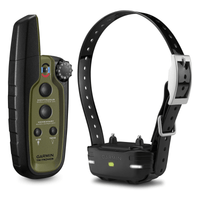 Garmin Sport Pro (bundle) Garmin link is the full Sport PRO bundle (collar + handheld). |
Hunting and field work | 3/4 mile | 10 levels; Continuous, Momentary, Vibration, Tone | View Garmin Sport PRO on PetsTEK → |
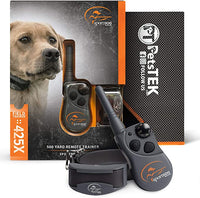 SportDOG 425X |
Everyday training, good value | 500 yards | 21 levels; Nick, Constant, Tone, Pager vibration | View SportDOG 425X on PetsTEK → |
See our ranked picks: Best Shock Collar for Dogs
Frequently Asked Questions
Are shock collars cruel?
The tool isn’t the ethics — the training is. Low working level, correct timing, known commands: communication tool. High levels or punishment: cruel. This guide exists so people land in the first category.
Do shock collars hurt dogs?
At a working level, most dogs show a mild ear flick or head turn. If a dog yelps, jumps, or cowers, the level is far too high.
What’s the difference between a shock collar and an e-collar?
Same tool, different name. “E-collar” is the term trainers prefer; “shock collar” is what most people search for.
Can I use a training collar on a small dog?
Yes, with a collar sized for small dogs and a low working level. See Shock Collar for Small Dogs.
How long does it take to train with an e-collar?
Most dogs show reliable recall improvement within 1–2 weeks of consistent daily sessions. Full off-leash reliability takes longer — weeks to months depending on the dog and distractions.
Will my dog become collar-dependent — only listening when the collar is on?
Only if you never phase it out. Once the dog is reliable, start rotating: collar on but unused, then collar off for easy sessions, then off more often. The goal is a dog that listens with or without it.
Can a training collar stop aggression?
No — and don’t try. Aggression needs a professional trainer or behaviorist. A collar used on an aggressive dog can escalate the problem.
Next Steps
- Small dog? Shock Collar for Small Dogs
- Free PDF: 7-Day E-Collar Training Plan — day-by-day sessions
- Free PDF: How to Introduce Your Dog to a Training Collar
- Free PDF: Shock Collar Settings Explained: Beep, Vibrate, Stim
- Shop the range: Browse training collars on PetsTEK