
By the PetsTEK Training Team · Updated November 2026
This site is by PetsTEK, the dog training gear store. The collars below are products we sell. This page answers one question: which bark collar fits your dog’s barking, and when is a bark collar the wrong tool entirely? Every price and spec below was checked against live PetsTEK listings on November 1, 2026 — click through for the current price and stock. We have not hands-on tested these collars on barking dogs ourselves; the picks below are judged on verified specs, detection design, and mode flexibility, not on claimed testing. A bark collar interrupts barking. It does not teach a dog what to do instead, and it does not fix the reason the dog is barking. Read the causes section before you buy — for some barking, the right answer is not a collar at all.
Quick answer: For most barking dogs, buy the SportDOG NoBark SBC-R ($109.99) — but check stock first, because PetsTEK showed only 1 left on November 1, 2026. Its Temperament Learning mode finds the right level for your dog automatically, and its dual detection (sound plus throat vibration, both required) is the best defense against false corrections from other dogs or the doorbell. For the gentlest start, buy the Garmin BarkLimiter Deluxe ($129.99): begin on vibration, let its AutoRise climb only as far as needed, and keep static as the backup, not the default. For a small dog, the Dogtra YS300 ($84.99) is the cheapest real bark collar here, with a vibration warning before any stimulation. But first: a collar that fires while you are out does not know why your dog is barking. If the barking is separation anxiety, fear, or pain, a collar can make it worse — see “When NOT to Use a Bark Collar” before you spend anything.
Barking is communication, not disobedience. A dog barks at the window because something moved, in the yard because it is bored, at night because it is anxious, and at you because it learned that barking gets attention. A bark collar treats all four the same way: it detects a bark and interrupts it. That works well for one kind of barking — the habitual, trigger-driven kind, where the dog barks out of routine and a consistent interruption breaks the habit. It works badly for the others, because the interruption lands on a dog that is already stressed, and a stressed dog that gets corrected for expressing stress does not calm down — it shuts down, escalates, or redirects the frustration somewhere else. The collars below are judged on what barking actually demands: detection that fires only on your dog’s bark, a mode that starts gentle and escalates only as far as needed, a fit that keeps contact without irritating skin, and an honest safety shutoff. Everything else on this page — the causes, the triage, the introduction plan — exists so you buy the right tool for the right bark, or no collar at all.
How Barking Works: The Chain a Collar Interrupts
Every bark follows the same chain: trigger, arousal, response, reinforcement. Something happens (doorbell, passerby, another dog), the dog’s arousal rises, the dog barks, and something rewards the bark — usually the trigger leaving. The delivery driver walks away, the other dog passes, the squirrel runs up the tree, and the dog learns that barking made the scary or exciting thing go away. That is why barking is so persistent: it pays off almost every time. A bark collar breaks the chain at the response step — the bark earns an interruption instead of a payoff. That is also why a collar alone rarely finishes the job: it never changes the trigger or the arousal, and it never teaches the dog a quiet behavior to do instead. The strongest results come from pairing the collar with the other half of the work — managing triggers where you can, and rewarding quiet deliberately, so the dog learns both that barking no longer pays and that quiet does. If the chain starts with fear or panic rather than habit, breaking it at the response step does not help; the dog needs the fear addressed first, and that is a vet or behaviorist conversation, not a collar purchase.
First, Why Is Your Dog Barking? The Triage Table
| If the barking is… | Start with… |
|---|---|
| Predictable triggers (doorbell, passersby, other dogs on walks) | A bark collar fits here — this is the habitual, trigger-driven barking a consistent interruption breaks. Pair it with rewarding quiet at the window. |
| Only when you leave the house | Do NOT start with a collar. Separation-related barking is anxiety, and correcting an anxious dog for panicking usually makes the panic worse. Talk to your vet or a behaviorist first; desensitization and departure training come before any device. |
| Boredom or under-exercise (yard barking, fence running) | Fix the cause first: more exercise, enrichment, and company. A bored dog with a collar becomes a quiet bored dog — until the collar comes off. Revisit a collar only if the barking continues after the dog’s day is full. |
| Fearful barking (strangers, storms, new places) | Do NOT start with a collar. A frightened dog corrected for barking learns that scary things now also predict discomfort, and fearful barking often escalates into fear-based aggression. Vet or behaviorist first. |
| Attention barking (barks at you until you respond) | Train this one without a collar first: the fix is to stop paying for barking with attention and start paying for quiet. A collar can help later if the habit is deeply ingrained, but attention is the cheapest lever you own. |
| Night barking or sudden new barking in an older dog | Vet visit first. Pain, hearing changes, and cognitive decline can all show up as new barking, and no collar fixes any of them. |
Before You Buy: Is a Bark Collar Right for Your Dog?
- A bark collar is for nuisance barking that is habitual and trigger-driven, in a dog that is otherwise healthy, confident, and over 6 months old. Most makers set a 6-month minimum age, and every collar below has a minimum weight — check it before you buy, because a receiver that is too heavy or too strong for a small dog is a welfare problem, not a bargain.
- The AVSAB (American Veterinary Society of Animal Behavior) position is that training should start with positive reinforcement and that aversive tools carry risks when misused; the research most often cited in this debate includes Cooper et al. (2014, PLoS ONE) on the welfare effects of e-collar training and Schilder & van der Borg (2003) on stress behaviors in dogs trained with shock collars. We cite them because the honest version of this page includes the evidence that cuts against casual use, not just the evidence for it.
- Never use a bark collar on a dog that is deaf or hearing-impaired (it cannot connect the correction to the bark), on a dog with a neck injury or skin condition, or as a punishment for barking you have not yet tried to understand. And never leave one on all day: Dogtra’s own manual caps wear at 8 hours at a time, and every maker expects you to check the skin under the contact points daily.
- If you are unsure whether your dog’s barking is habit or anxiety, spend the money on a behavior consultation instead of a collar. A collar bought for the wrong cause is the most expensive mistake on this page.
How Bark Collars Detect a Bark — and Why False Corrections Happen
A bark collar has to answer one hard question: was that your dog? Three detection designs try, and they fail differently.
- Sound-only (microphone): hears a bark and fires. Simple, but the neighbor’s dog, a slammed door, or a loud television can all trigger it. Your dog gets corrected for something it did not do, and corrections the dog cannot connect to its own behavior teach nothing except confusion.
- Vibration-only (throat sensor): fires when the dog’s throat vibrates. Better at ignoring other dogs, but a dog that shakes, scratches, or jumps can still set it off.
- Dual detection (sound plus vibration, both required): the collar fires only when it hears a bark and feels the throat vibrate at the same time. This is the design to look for, and it is why the SBC-R leads this page — its Silent Partner technology is exactly this two-condition check. No detection is perfect, which is why every collar below also needs a sensible mode: a collar that starts low and climbs gradually punishes a false trigger far less than one that starts at a fixed high level.
- A note on spray and ultrasonic options: citronella-spray and ultrasonic collars interrupt without static, and they suit owners who want a no-shock first step. PetsTEK’s current bark lineup is static-based, so this page judges static collars honestly rather than pretending a spray option is in the table. If you want a no-shock bark option, start with the vibration-only and tone-only modes on the collars below — the YS300’s pager vibration and the BP-504’s Tone-Only mode both work without any static at all.
Bark Collar vs Remote Training Collar: Which Tool for Barking?
| Feature | Bark collar (automatic) | Remote training collar (handheld) |
|---|---|---|
| Who triggers it | The collar itself, on detecting a bark | You, with a remote, when you see the behavior |
| Works when you are out | Yes — that is the point | No — you have to be present and watching |
| Best for | Habitual barking at predictable triggers, including while you are away | Barking on command cues, recall, and multi-behavior training while you are with the dog |
| Teaches quiet on cue | No — it interrupts, it does not teach a “quiet” command | Yes — you can pair tone with a quiet cue and reward it |
| Risk | Fires without you there to judge context; a false trigger or an anxious dog gets corrected unsupervised | Mis-timed corrections by the handler; the timing-failure trap (a correction landing after the behavior ends, or while you are frustrated, teaches nothing) |
The honest answer for many owners is both, in sequence: a bark collar for the unsupervised hours, and a remote trainer for the training sessions where you teach the dog what quiet earns. If your dog only barks when you are home, a remote trainer may be the better first buy — see our remote-trainer guides linked at the foot of this page.
Quick Answer: Which Bark Collar for Which Dog
| Your situation | Pick | Why |
|---|---|---|
| Most barking dogs, best all-rounder | SportDOG NoBark SBC-R | Temperament Learning finds the level; dual detection prevents false corrections — but only 1 left at PetsTEK on Nov 1 |
| Gentlest start, vibration first | Garmin BarkLimiter Deluxe | AutoRise climbs only as far as needed; vibration setting before static |
| Small dog, lowest price | Dogtra YS300 | 10 lbs+, vibration warning before stim, $84.99 |
| Large, loud dog | Dogtra YS600 | 35 lbs+, 10 low-to-high levels, IPX9K waterproof |
| Most adjustment, collar adapts itself | PetSafe Rechargeable (PBC00-15999) | 15 auto-adjusting levels with temperament learning |
| Smallest dog, track progress | E-Collar BP-504 Barkless Pro | 5 lbs+, bark counter, Tone-Only mode |
The Six Bark Collars Compared
| Collar | Best for barking | Min weight | Stim Levels & Modes | Shock Function | Bark fit | Check price | |
|---|---|---|---|---|---|---|---|
 | SportDOG NoBark SBC-R — $109.99 — LOW STOCK: only 1 left at PetsTEK on Nov 1 | Best all-rounder | 8 lbs+ | 10 levels; Temperament Learning, Progressive Correction, User-Selected; dual detection | Yes | Temperament Learning finds the level for the dog; 200-hour battery; submersible to 10 ft | |
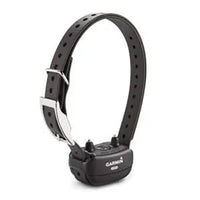 | Garmin BarkLimiter Deluxe — $129.99 | Gentlest start | Not stated on the PetsTEK listing | AutoRise, Manual, Vibration settings; level count not stated on the listing | Yes | Vibration-first option; AutoRise climbs only as far as needed | |
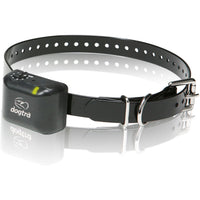 | Dogtra YS300 — $84.99 | Small dog, lowest price | 10 lbs+ | 6 levels, low to medium, plus pager vibration; sound-recognition sensor | Yes | Vibration warning before stim; smallest rechargeable Dogtra bark collar | |
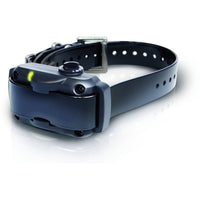 | Dogtra YS600 — $89.99 | Large, loud dog | 35 lbs+ | 10 levels, low to high, plus pager vibration | Yes | Widest level range here for a bigger dog; IPX9K waterproof | |
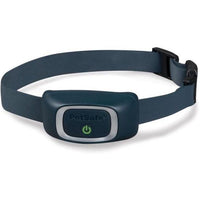 | PetSafe Rechargeable Bark Collar (PBC00-15999) — $110.99 | Most adjustment | 8 lbs+ | 15 levels, automatically adjusting, with temperament learning | Yes | Collar adapts as the dog responds; 40-hour battery | |
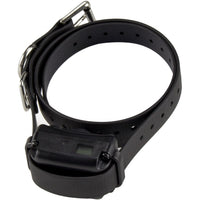 | E-Collar BP-504 Barkless Pro — $109.99 | Smallest dog, track progress | 5 lbs+ | 9 levels (see note), Auto / Tone-Only / Manual modes, bark counter | Yes | Lightest minimum weight here; Tone-Only mode works with no static at all |
The Picks in Detail
SportDOG NoBark SBC-R — Best All-Rounder for Barking
The SBC-R is the most complete bark collar on this page because it solves the two problems that matter most: finding the right level, and firing only on your dog’s bark. Temperament Learning mode starts low and adjusts itself to the dog, so you are not guessing a level from a table. Silent Partner dual detection requires both sound and throat vibration before it fires, which is the best available defense against the neighbor’s dog setting your dog’s collar off. Three modes (Temperament Learning, Progressive Correction, User-Selected) cover a first-time owner and an experienced one. The trade-offs are real: there is no tone or vibration-only mode, so a sensitive dog has no gentler setting to graduate from, and PetsTEK showed only 1 left on November 1, 2026 — if it is gone when you click through, the SBC-10 below is the closest alternative. Who suits it: owners who want the collar to do the thinking, and dogs whose barking is habitual and trigger-driven. Who should skip it: owners of very sensitive dogs who want a vibration-first option (see the BarkLimiter), and anyone who needs more than one unit right now.
Garmin BarkLimiter Deluxe — The Gentlest Start (Pick for Safety)
Dual-criterion verdict, stated up front: this page judges every pick on effectiveness and on safety, and the BarkLimiter wins on safety. Its vibration setting lets you start with no static at all, and AutoRise begins at the lowest level and climbs only as far as the barking requires — the collar escalates, you do not. That makes it the pick for an owner who is uneasy about static, or a dog that responds to mild interruptions. The honest gaps: the PetsTEK listing does not state a minimum weight or a total static level count, and this page does not invent either — check the listing before buying for a very small dog. Who suits it: first-time bark-collar owners, sensitive dogs, and anyone who wants vibration to do the work. Who should skip it: owners who want a fixed manual level they set themselves (the SBC-R’s User-Selected mode does that better).
Dogtra YS300 — Best for Small Dogs, Lowest Price
The YS300 is the smallest rechargeable bark collar Dogtra makes, and at $84.99 it is the cheapest real bark collar on this page. Its sound-recognition sensor is built to tell your dog’s bark from surrounding noise, and its pager vibration can warn before any stimulation — set it to vibrate-only and you have a no-static bark collar. Six low-to-medium levels keep the correction mild, which suits a small dog but limits it for a large, loud, persistent barker. Fit note: it is made for dogs 10 pounds and up, and Dogtra’s manual says it is not for dogs under 10 pounds or under 6 months. Who suits it: small and medium dogs with routine trigger barking. Who should skip it: large dogs over 35 pounds (the YS600 below is the same family, built bigger) and multi-dog households where another dog’s barking could still confuse a sound-based sensor.
Dogtra YS600 — Best for Large, Loud Dogs
The YS600 is the YS300’s bigger sibling: 10 low-to-high levels instead of 6, the same pager vibration, the same 2-hour rapid charge, and IPX9K waterproofing for a dog that swims, works, or lives outdoors. It is made for dogs 35 pounds and up, and that floor matters — this is not a small-dog collar with a bigger strap, it is a stronger collar for a bigger dog. The level range is the point: a large, persistent barker that ignores low levels has room to find a working level without jumping straight to the top. Who suits it: medium and large dogs with loud, persistent barking, including outdoor and working dogs. Who should skip it: any dog under 35 pounds, and owners who want an automatic learning mode (the SBC-R and PetSafe below do that; the YS600 is manual).
PetSafe Rechargeable Bark Collar (PBC00-15999) — Most Levels, Collar That Adapts
Fifteen automatically adjusting static levels is the widest auto-adjusting range on this page, and the built-in temperament learning means the collar tracks how the dog responds and adapts rather than repeating the same level regardless. That matters for barking because a dog that habituates to a fixed level will bark through it within days; a collar that adjusts stays ahead of habituation longer. Forty hours of battery from a 2-hour charge is practical for daily use, and the 8-pound floor covers most small dogs. The trade-off: there is no vibration-only mode listed, so a no-static start is not an option here — pair this with the BarkLimiter if vibration-first matters to you. Who suits it: owners who want the collar to adapt on its own, and dogs that have already learned to bark through a fixed-level collar. Who should skip it: owners who want a vibration-only or tone-only mode.
E-Collar BP-504 Barkless Pro — Best for the Smallest Dogs, and the One That Counts Barks
The BP-504 takes dogs from 5 pounds up — the lowest floor on this page — and it is the only pick here with a bark counter, which turns progress from a feeling into a number: barks per day, falling week by week, is the clearest evidence the plan is working. Three modes cover the range: Auto-Mode for hands-off use, Tone-Only for a no-static start, and Manual Mode for a set level. Three bark-sensitivity levels let you tune how easily it fires. One honest flag: the PetsTEK listing disagrees with itself on level count — the features summary says 9 static levels, the body copy says 8. This page reports the discrepancy rather than picking a number silently; the difference does not change the recommendation, but a listing that contradicts itself is worth knowing about before you buy. Who suits it: toy and small breeds, owners who want to track progress numerically, and anyone who wants a Tone-Only mode. Who should skip it: owners who want dual sound-plus-vibration detection (the SBC-R’s two-condition check is stricter).
Two More In Stock at PetsTEK
The table above holds at six picks, but two more bark collars were in stock at PetsTEK on November 1, 2026 and deserve a line each. The SportDOG NoBark SBC-10 ($99.99, 8 lbs+, 10 levels, submersible to 25 feet) is the SBC-R’s simpler sibling — Progressive Correction and User-Selected modes, no Temperament Learning — and its PetsTEK page disagrees with itself on battery: the title says replaceable battery while the body copy describes a rechargeable lithium-ion. The Dogtra Smart NoBark ($124.99, 10 lbs+, IPX9K) adds triple detection that separates barking, whining, and howling, plus app control with a 100-level e-collar mode for remote training — the smartest collar here, and the priciest. View SportDOG NoBark SBC-10 on PetsTEK → · View Dogtra Smart NoBark on PetsTEK →
Sold-out note: the PetSafe NanoBark Collar (PBC00-17758) showed SOLD OUT at PetsTEK on November 1, 2026, so it is not a pick on this page. If it returns, its 1.4-ounce receiver and 6–13-inch neck range would make it the small-dog pick to watch.
The 7–14 Day Introduction Protocol
Do not put a bark collar on a barking dog and walk away. Run this plan:
- Days 1–2: Fit first, no corrections. Let the dog wear the collar switched off. Fit it high behind the ears, snug enough that both contact points touch skin — one finger under the strap, no more — and check the skin underneath daily. A collar that does not touch skin will look like it is not working; a collar worn loose and firing intermittently is worse than one that is not firing at all.
- Days 3–4: Lowest setting, supervised, short sessions. Switch it on at the lowest level or in vibration/tone mode. Stay with the dog. Watch the first corrections: the dog should pause, look around, or stop — not yelp, bolt, or shut down. If the reaction is fear, the level is too high or the dog is not a bark-collar candidate; stop and reassess.
- Days 5–7: Normal routine, still supervised. Let the dog wear it during the usual barking windows — the morning delivery, the evening walk-past — and keep sessions within the wear cap. Expect the barking to drop, then spike: many dogs test the collar for a day or two before the habit breaks. That spike is normal; escalating the level in response to it is the mistake.
- Days 8–14: Unsupervised use, if the supervised week went well. Now the collar can work while you are out — the use case that justifies an automatic collar at all. Keep rewarding quiet deliberately: a treat for settling at the window teaches the dog what to do instead, which is the half the collar cannot do.
- After day 14: Start phasing it out. Mix collar-on and collar-off days, and watch whether quiet holds without the collar. If it does, the habit is breaking; if barking returns fully the moment the collar comes off, you have a collar-smart dog (see below), and the underlying cause still needs work.
What to Expect: The First Two Weeks
- First corrections: most dogs pause mid-bark, look confused, and try again. That confusion is the learning moment — follow it with calm, normal routine, not fuss or scolding.
- The bark-correction cycle: a dog that barks again within seconds gets the next step up (in Progressive or Temperament Learning modes); a dog that stays quiet resets to the lowest level. That reset is the design working, not the collar failing.
- Week-2 testing: expect a day or two where the dog barks more, not less, as it tests whether the rule still holds. Hold the level, hold the routine, and do not chase the spike with a higher setting.
- False triggers: if the collar fires when your dog did not bark, check fit first (a loose collar misreads), then sensitivity (lower it a step), then detection (a dual-detection collar is the fix for a sound-only collar in a multi-dog home).
- Skin checks: redness, sores, or hair loss under the contact points mean the collar is too tight, worn too long, or left on without rotation. Stop use, let the skin heal, and refit before restarting. This is the most common real injury from bark collars, and it is a fit and wear-time failure, not a stimulation injury.
When NOT to Use a Bark Collar
- Separation anxiety: barking, howling, or destruction only when you leave. Correcting panic makes panic worse. Vet or behaviorist first.
- Fearful barking: strangers, storms, novel places. A frightened dog corrected for barking can escalate to fear-based aggression.
- Pain or illness: sudden new barking, especially in an older dog. Vet visit before any device.
- Puppies under 6 months, or dogs under a collar’s minimum weight. The minimums on this page are 5, 8, 10, and 35 pounds for a reason.
- Deaf or hearing-impaired dogs: the dog cannot connect the correction to the bark.
- As a substitute for exercise, company, or training: a bored dog with a collar is still a bored dog.
- All-day wear: no bark collar is meant to live on the dog. Respect the wear cap, check skin daily, and give the neck collar-free hours every day.
The Collar-Smart Trap: Quiet Only With the Collar On
A dog that is silent with the collar on and barking the hour it comes off has not learned to be quiet — it has learned to be quiet while wearing the collar. This is the bark-collar version of collar-smart behavior, and it is the clearest sign the underlying cause was never addressed. The fix is not a stronger collar; it is the rest of the plan: trigger management, rewarded quiet, and collar-free sessions where quiet still earns something. If you phase the collar out (days 14 and beyond, above) and the barking returns at full volume, treat that as information, not failure — it tells you the cause is still live, and the triage table at the top of this page is where to look next. Try it on your hand first: before the first session, hold the receiver and trigger it, so you know exactly what the lowest level feels like. A level you would not accept on your own hand is not a level to start your dog on.
Check the Basics First: The Fixes That Cost Nothing
- Exercise before the barking window: a tired dog barks less at the window. A morning walk or play session before the delivery-driver hours changes the whole day.
- Enrichment for the yard dog: food puzzles, scatter feeding, and a rotating toy box give a bored dog something to do besides fence-running.
- Manage the trigger: frosted window film, a barrier to the front window, or a white-noise machine costs less than any collar and removes the payoff (the trigger leaving) that keeps barking alive.
- Reward quiet, on purpose: catch the dog being quiet at the window and pay for it, every time, for two weeks. Most owners only ever pay attention to barking, which teaches the dog that barking is the only thing that earns attention.
- One change at a time: if you start a collar, a new exercise routine, and window film on the same day, you will never know which one worked — and you will never know which one to keep.
Buying Guide: What to Check Before You Buy
- Fit and minimum weight first: a collar that does not fit, or a receiver too heavy for the dog, fails before it starts. Check the minimum weight (5–35 pounds across this page) and the neck range, and fit high behind the ears with both contact points on skin.
- Detection type: dual detection (sound plus vibration) beats sound-only in any home with other dogs, televisions, or street noise. This is the single most important spec on a bark collar, and it is worth more than extra levels.
- Levels and modes: more levels are not automatically better — what matters is a mode that starts low and climbs gradually (Temperament Learning, AutoRise, Progressive Correction) rather than a fixed level you must guess.
- Battery reality: rechargeable collars here run 40–200 hours per charge depending on model; check the charge time (2 hours across this page) and whether the collar warns before it dies, because a dead collar mid-day teaches the dog that barking sometimes pays again.
- Waterproofing: “waterproof” without a rating is a claim, not a spec. The YS600 and Smart NoBark carry IPX9K; the others state submersion depths (10 or 25 feet) without an IP rating. Match the rating to the dog’s life — a swimmer needs more than a rain-proof collar.
- Safety shutoff: every collar here should stop correcting after a set number of barks in a short window, so a panicking dog is not corrected indefinitely. Confirm the shutoff exists on the listing before you buy, and never override it.
- Range is not a bark-collar spec: unlike remote trainers, bark collars work on the dog, not at a distance. If a listing leads with range, it is selling you a remote trainer, not a bark collar.
New to training collars? Start with the free 7-Day E-Collar Training Plan — a day-by-day introduction plan for first-time collar owners, free to download, no email required.
PDF link opens in a new tab.
Frequently Asked Questions
Do bark collars actually work?
For habitual, trigger-driven barking, yes — a consistent interruption breaks the habit, especially when paired with rewarding quiet. They work worst for barking driven by anxiety, fear, boredom, or pain, because the collar interrupts the bark without fixing the cause. If the barking is separation anxiety or fear-based, a collar can make it worse; see a vet or behaviorist first.
Are bark collars cruel?
The honest answer is that it depends on how they are used. Research cited in this debate includes Cooper et al. (2014, PLoS ONE) on welfare effects of e-collar training and Schilder & van der Borg (2003) on stress behaviors, and the AVSAB position favors starting with positive reinforcement. A collar used at the lowest effective level, fitted correctly, worn within its time cap, and paired with rewarded quiet is a different tool from one cranked high and left on all day. Misuse — high levels, poor fit, all-day wear, or use on an anxious or fearful dog — is where the welfare problems in the research come from.
At what age can a puppy start wearing a bark collar?
Most makers set a 6-month minimum age, and every collar has a minimum weight as well — 5, 8, 10, or 35 pounds across the collars on this page. A puppy under 6 months is not a bark-collar candidate; positive reinforcement and management come first, and a young puppy’s barking is usually normal development, not a habit to correct.
What is the difference between a bark collar and a remote training collar?
A bark collar works automatically: it detects your dog’s bark and corrects without you doing anything, so it works while you are out. A remote training collar works only when you press a button on a handheld remote, so you must be present and watching — but it lets you teach a quiet cue and reward it, which a bark collar cannot do. Many owners end up using both: the bark collar for unsupervised hours, the remote trainer for training sessions.
Why does my dog still bark with the collar on?
Check fit first — both contact points must touch skin, fitted high behind the ears; a loose collar misfires or fails to register. Then check the cause: if the barking is anxiety, fear, or boredom, the collar is interrupting a symptom, and the dog will bark through it or find another outlet. Then check for habituation: a fixed level a dog has learned to tolerate needs a progressive or learning mode, not just a higher setting. And check for collar-smart behavior: if the dog is quiet only while wearing the collar, the habit was never actually broken.
How long can my dog wear a bark collar each day?
Never all day. Dogtra’s manual caps wear at 8 hours at a time, and every maker expects daily skin checks under the contact points and collar-free hours each day. Rotate the collar’s position, check for redness or sores, and stop use until the skin heals if you find any. Redness under the contact points is the most common real injury from bark collars, and it comes from fit and wear time, not from stimulation.
Can a bark collar help separation anxiety?
No — and it can make it worse. A dog barking because it panics when you leave is expressing distress, and correcting distress teaches the dog that being alone now also predicts discomfort. Separation-related barking needs desensitization, departure training, and often a vet or behaviorist, not a device. If your dog only barks when you leave, skip the collar and start with a behavior consultation.
Related Guides
- Complete Guide: Shock Collar for Dogs
- Best Shock Collar (general roundup)
- How to Use a Training Collar Safely
- Best Shock Collar for Stubborn Dogs
- Best Shock Collar for Dogs That Run Away
- Best Shock Collar for Small Dogs
- E-Collar vs Shock Collar
Disclosure: shockcollarfordogs.com is operated by PetsTEK, and the collars on this page are products PetsTEK sells. Links to petstek.com carry a referral tag so we can see which guides help readers; buying through them costs you nothing extra. Prices and stock were checked against live PetsTEK listings on November 1, 2026 and can change — the listing is always the final word. We do not claim hands-on testing we did not do: picks are judged on verified specs, detection design, and mode flexibility. If your dog’s barking is anxiety, fear, or pain, no collar on this page is the right first step — talk to your vet or a certified behaviorist first.