
By the PetsTEK Training Team · Updated October 2026
This site is by PetsTEK, the dog training gear store. The collars below are products we sell. This page answers one question: what actually reaches skin through a thick coat? Every price and spec below was checked against live PetsTEK listings on October 29, 2026 — click through for the current price and stock. We have not hands-on tested these collars on coated dogs ourselves; the picks below are judged on verified specs, fit, and contact design, not on claimed testing.
Quick answer: For most thick-coated dogs, buy the Mini Educator ET-300 ($199.99): 100 levels with a gentle stim, customizable contact points, and a 1/2-mile range that covers yard, park, and trail work. For a big coated dog, the Dogtra 1900X ($254.99) is the tougher pick, sized for dogs 35 lbs and up with 13-inch-plus necks. On a budget, the SportDOG FieldTrainer 425X ($154.99) does the core job for less. The one rule for every pick here: if the collar seems not to work on a thick-coated dog, check contact before you touch the level — part the fur, fit the collar high and snug, and confirm both contact points touch skin. Raising the level to fix a contact problem is the most common thick-coat mistake.
A thick coat does not change how a training collar works. It changes whether the collar works at all on a given day. Fur between the contact points and the skin breaks the circuit — partly, or completely, or only when the dog shakes, runs, or turns its head. The result looks like a stubborn dog, a weak collar, or a dead battery, and owners respond by turning the level up, which punishes a dog that never felt the lower level in the first place. The collars below are judged on exactly what fixes that: contact-point choice, a receiver that stays put on a moving coated neck, a fit range that brackets a coated neck measurement, and a stim scale fine enough to re-find the working level once contact is good.
Before You Pick: The Contact Test Comes First
Do this before you buy, and again on the first day with any new collar:
- Fit the collar high on the neck, behind the ears, where the fur is usually thinnest and the neck moves least — not low on the throat, where a coated dog’s ruff is thickest.
- Part the fur with your fingers and slide the receiver in until both contact points press skin. You should feel skin, not just fur, under both points. If you can only feel one point, the fit is wrong.
- Fit the longer contact points where your system includes them, and check the product page for the matching long-contact accessory if it does not. Do not shave a double coat to fit a collar — part the fur instead, and re-check after the dog shakes, runs, or swims, because wet and matted fur changes contact.
- Test at the lowest level with tone or vibration first, then the lowest stim level, and watch for the first mild reaction — an ear flick, a head turn, a brief pause. That reaction is your working level, and it is only meaningful once contact is confirmed. If there is no reaction at a level that should register, stop and re-check fit and contact before going higher.
- Check the basics first: a thick-coated dog that pulls, jumps, or won’t recall may be under-exercised, under-trained on-leash, or simply adolescent. A collar reinforces a known command; it does not replace foundation training, and it will not fix a dog that never learned the command in the first place.
Quick Answer: Which Collar for Which Thick-Coated Dog
| Your situation | Pick | Why |
|---|---|---|
| Thick-coated dog, best all-rounder | Mini Educator ET-300 | Customizable contact points, gentle 100-level stim, 1/2-mile range |
| Big thick-coated dog, field work | Dogtra 1900X | Robust receiver that holds position, dial remote, 3/4-mile range, sized 35 lbs+ / 13″+ necks |
| Thick-coated dog, professional field work | Garmin PRO 550 | Full mile, 21 levels, beacon lights, BarkLimiter — the field professional’s pick |
| Thick-coated dog, field work + bark control | Garmin Sport PRO | 3/4 mile, BarkLimiter built in, beacon lights, collar + handheld bundle |
| Thick-coated dog, yard and neighborhood, simplest controls | PetSafe 900 Yard | 900 yards, safety lock, neck fit up to 27 inches |
| Thick-coated dog on a budget | SportDOG FieldTrainer 425X | 500 yards, 21 levels, $154.99 — the cheapest real thick-coat system here |
The Six Collars Compared
| Collar | Best for thick fur | Range | Stim Levels & Modes | Shock Function | Thick-coat fit | Check price | |
|---|---|---|---|---|---|---|---|
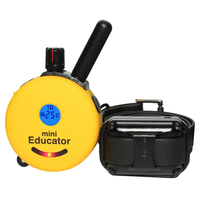 | Mini Educator ET-300 — $199.99 | Best all-rounder for thick fur | 1/2 mile | 100 levels; Nick, Continuous, Vibration, Pavlovian tone, Boost 1–60 | Yes | Customizable contact points; fits small, medium, and large dogs | View Mini Educator ET-300 on PetsTEK → |
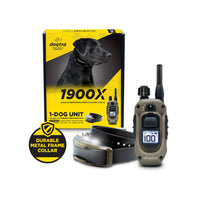 | Dogtra 1900X — $254.99 | Big coated dogs, field work | 3/4 mile | 100 levels; Nick, Continuous, XPP vibration, Tone, Boost | Yes | Robust receiver holds position; 35 lbs+, neck 13″+ | View Dogtra 1900X on PetsTEK → |
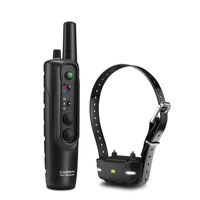 | Garmin PRO 550 — $399.99 | Professional field work | 1 mile | 21 levels; Continuous, Momentary, Tone, Vibration, beacon lights, BarkLimiter | Yes | Field build; trains up to 3 dogs | View Garmin PRO 550 on PetsTEK → |
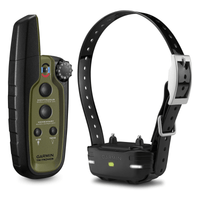 | Garmin Sport PRO Bundle — $299.99 | Field work + bark control | 3/4 mile | 10 levels; Continuous, Momentary, Vibration, Tone, beacon lights, BarkLimiter | Yes | Field build; trains up to 3 dogs | View Garmin Sport PRO on PetsTEK → |
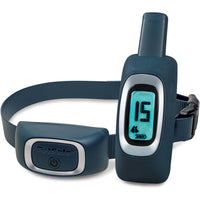 | PetSafe 900 Yard Remote Trainer — $199.95 | Simplest thick-coat system | 900 yards | 15 levels; Tone, Vibration, Static; safety lock | Yes | 8 lbs+, neck 6″–27″; expands to 2 dogs | View PetSafe 900 Yard on PetsTEK → |
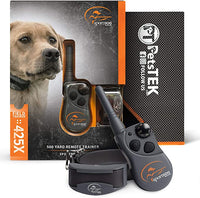 | SportDOG FieldTrainer 425X — $154.99 | Best value for thick fur | 500 yards | 21 levels; Nick, Constant, Tone, Pager vibration | Yes | 8 lbs+; DryTek waterproof build; expands to up to 3 dogs | View SportDOG FieldTrainer 425X on PetsTEK → |
A stim number is NOT comparable across brands — the ET-300’s 100 levels, the PRO 550’s 21, and the Sport PRO’s 10 are different scales. Compare contact design, fit, and receiver build, not raw level counts. Advertised range is line-of-sight best case — hills, trees, and buildings cut real-world range, so buy more range than your longest training distance. Prices checked against live PetsTEK on October 29, 2026 — click through for the current price and stock. Source: petstek.com live listings.
The Picks in Detail
Mini Educator ET-300 — Best All-Rounder for Thick Fur ($199.99)
The ET-300 is the default thick-coat pick because contact is its design problem, solved openly: the live PetsTEK listing calls out customizable contact points, so you fit the points to the coat instead of hoping the standard ones reach. The stim is Educator’s blunt pulse across 100 levels with Nick, Continuous, Vibration, Pavlovian tone, and Boost 1–60, which gives fine control once contact is confirmed — important, because a coated dog’s working level can shift as the coat mats, sheds, or gets wet. Range is 1/2 mile, and it fits small, medium, and large dogs. Its honest limit is range, not contact: field dogs that work beyond 1/2 mile need the 1900X or a Garmin below.
Choose if: your dog has a thick, double, long, or curly coat, you want the clearest contact-point choice, or this is your first collar for a coated dog.
Who should skip it: owners who train beyond 1/2 mile — buy range once with the 1900X or PRO 550 instead of outgrowing this one.
Dogtra 1900X — Best for Big Thick-Coated Dogs ($254.99)
The 1900X is the big-coated-dog pick: a robust, metal-cased receiver sized for dogs 35 lbs and up with 13-inch-plus necks, built to hold its position on a strong dog in rough use instead of sliding around on a thick ruff. The dial remote is fast with gloves on, range is 3/4 mile, and the 100 levels with Nick, Continuous, XPP vibration, Tone, and Boost give fine control. Fit it high, part the fur, and confirm both points touch skin — the receiver’s weight and shape help it stay there, but they do not replace the contact check.
Choose if: your dog is 35 lbs or more with a thick coat, you train outdoors, or you want a dial remote and a rugged receiver.
Who should skip it: owners of a small coated dog — the receiver is too big under 35 lbs, so fit the smaller dog first (see our small-dogs guide).
Garmin PRO 550 — Best for Professional Field Work ($399.99)
The PRO 550 is the most expensive collar on this page and the most capable: a full mile of range, 21 levels of Continuous and Momentary stimulation, Tone, Vibration, remotely operated LED beacon lights for low-light work, and a built-in BarkLimiter with AutoRise. It trains up to three dogs on one handheld. For a thick-coated working dog, the mile matters — a coated hunting or farm dog ranges far, and a collar that quits at 500 yards is useless at the distance where recall matters most. The trade-off is price and bulk: this is a field tool, priced like one.
Choose if: you train at a full mile, you hunt or work a coated dog in open country, or you want bark control built into a field system.
Who should skip it: yard and neighborhood trainers — a mile of range you never use is money spent on nothing, and the ET-300 or 425X covers that ground.
Garmin Sport PRO — Best Field System with Bark Control ($299.99)
The Sport PRO is the field all-rounder in a bundle: collar plus handheld, 3/4-mile range, 10 levels of Continuous and Momentary stimulation, Vibration, Tone, LED beacon lights, and a built-in BarkLimiter, training up to three dogs. The 10-level scale is coarser than the ET-300’s 100 or the PRO 550’s 21, so if your coated dog needs very fine level differences as its coat changes through the seasons, the ET-300 adjusts more precisely. For most coated dogs, though, the Sport PRO’s combination of range, beacon lights, and bark control is the sweet spot — and the beacon lights earn their keep when a dark-coated dog disappears into brush at dusk.
Choose if: you train in the field, you want bark control built in, or you work in low light and want the beacon lights.
Who should skip it: pairs that need fine-grained level differences, or first-time buyers on a tight budget — the 425X does the core job for half the price.
PetSafe 900 Yard Remote Trainer — Simplest Thick-Coat System ($199.95)
PetSafe’s pitch is simplicity, and the 900 Yard is the coated-dog-friendly end of that line: 900 yards of range, 15 levels of Tone, Vibration, and Static, a safety lock so the level can’t drift, and a neck fit up to 27 inches — the widest stated neck range on this page, which matters for a thick-coated giant breed whose measured neck includes a lot of fur. It expands to a two-dog system with the matching receiver. The honest limit is range and ruggedness: 900 yards is plenty for yard and neighborhood work, but it is not a field system, and it has no beacon light.
Choose if: this is your first training collar, you train in the yard or neighborhood, or your dog’s coated neck is at the giant end of the scale.
Who should skip it: field trainers — buy range once with the Sport PRO or 1900X instead of outgrowing this one.
SportDOG FieldTrainer 425X — Best Value ($154.99)
The 425X is the cheapest real thick-coat system on this page, and it doesn’t feel like a compromise for everyday training: 500 yards, 21 levels, Nick and Constant static, Tone, and Pager vibration, expandable to three dogs, for dogs 8 lbs and up, with a DryTek waterproof build that matters when a coated dog swims and comes back with a soaked, matted neck. The receiver is smaller and lighter than the 1900X’s robust unit — fine for most coated dogs, but a very rough, muddy, hard-charging dog will wear the 1900X’s build better. Re-check contact after swimming: wet fur mats flat and then fluffs as it dries, and both states change the fit.
Choose if: budget matters, you train in yards, parks, and fields under 500 yards, or this is your first collar for a coated dog.
Who should skip it: owners who need a mile of range, or who want the toughest receiver on this page — pay the extra for the 1900X.
Buying Guide: Look For / Avoid
Contact-point choice — Look for: a system that lets you change contact points for coat length (the ET-300’s customizable points are the clearest example here), and a product page that names the matching long-contact accessory. Avoid: a collar whose only contact option is short and fixed, fitted to a heavy coat on hope.
Fit high, not low — Look for: a receiver that sits high behind the ears, where fur is thinnest and the neck moves least, with both points pressing skin. Avoid: fitting low on the throat under the thickest part of a ruff, or fitting over a matted coat without parting the fur first.
Receiver that stays put — Look for: a receiver shape and weight that holds position when the dog shakes, runs, and turns — robust builds (1900X) shine here. Avoid: a light receiver that slides on a slick coated neck and gives intermittent contact, which looks exactly like a stubborn dog.
Stim scale, not stim strength — Look for: a scale fine enough to re-find the working level as the coat changes (100 levels on the ET-300 and 1900X, 21 on the PRO 550 and 425X). Avoid: assuming a coated dog needs a high level — thick fur blocks signal, it does not make the dog less sensitive. Fix contact first, then find the level from the bottom of your own collar’s scale.
Seasonal coat changes — Look for: a collar you will re-fit when the coat blows out, mats, or gets wet — the working level from winter may not be the working level in summer. Avoid: setting a level once in January and never checking fit again.
Ergonomics — Look for: a remote you can operate without looking at it — dial remotes (1900X) and Garmin’s field handhelds are built for this. Avoid: a remote you have to study mid-session while a coated dog is already 200 yards away.
When NOT to Use One — and What to Try Instead
- If your dog is under 6 months old — positive reinforcement first.
- If your dog has fear or aggression problems — hire a professional trainer first; a collar can make these worse.
- If your dog hasn’t learned the command yet — teach it on-leash first, one command at a time.
- If you cannot get both contact points to touch skin through the coat — that is a fit problem, not a training problem. Change the contact points, re-fit, or change the collar. Do not raise the level to compensate.
- If the dog yelps, freezes, or shuts down — the level is too high or the dog isn’t ready. Stop and go back a step.
Alternatives that are often the right first move: more on-leash foundation training; a vibration-only collar (tone plus vibration, no stim) for sensitive or skittish coated dogs; a front-clip harness or head halter for pulling; and a professional trainer or behaviorist for fear, aggression, or separation anxiety.
Free PDF: The 7-Day E-Collar Training Plan
Day 1 is fit + beep-only conditioning. Vibrate comes on Days 2–3. Low-stim recall on Days 4–5. Proofing on Days 6–7. For a thick-coated dog, Day 1 matters most: fit the collar high on the neck, part the fur, confirm both contact points touch skin, and confirm the fit again after the dog shakes and runs — before any button is pressed.
Frequently Asked Questions
Why does my training collar seem not to work on my thick-coated dog?
Almost always, contact — not power. Fur between the contact points and the skin breaks the circuit, partly or completely, so the dog feels nothing at a level that should register. Part the fur, fit the collar high behind the ears, confirm both points press skin, and fit the longer contact points where your system includes them. Only re-find the working level after contact is confirmed — never raise the level to fix a contact problem.
Do thick-coated dogs need stronger stimulation than short-coated dogs?
No. Thick fur blocks signal; it does not make a dog less sensitive. Once contact is good, a coated dog’s working level — the lowest level that dog notices — is found exactly the same way as any dog’s: start at the bottom of your own collar’s scale and work up to the first mild reaction, like an ear flick or head turn. Never take level advice from someone with a different collar.
Should I shave my dog’s neck so the collar works?
No — do not shave a double coat to fit a collar. Part the fur with your fingers and slide the receiver in until both contact points press skin, and re-check after the dog shakes, runs, or swims. If you genuinely cannot get both points to touch skin through the coat, change the contact points or the collar — not the dog’s coat.
How do I know the contact points are actually touching skin?
Feel for skin, not just fur, under both points after fitting, and watch the dog’s reaction at the lowest stim level: a consistent mild reaction at a low level means contact is good. Inconsistent reactions — sometimes a response, sometimes nothing, at the same level — are the classic sign of intermittent contact. Re-fit, re-part the fur, and check again before changing the level.
Does a wet or matted coat change how the collar works?
Yes. Wet fur mats flat and then fluffs as it dries, and both states change the fit and the contact. Re-check fit and re-find the working level after swimming, bathing, or heavy rain, and keep the coat brushed out where the receiver sits. A collar that worked yesterday can fail today purely because the coat changed.
Are stim levels comparable between brands?
No. Each brand’s scale is relative to its own models only, so a level number on one collar means nothing on another — the ET-300’s 100 levels, the PRO 550’s 21, and the Sport PRO’s 10 are different scales. Start at the bottom of your own collar’s scale and work up to the first mild reaction for your dog. Your dog’s reaction is the measurement, not the number.
Are shock collars cruel?
It depends on how they are used, not on the tool alone. At a low working level, with a known command, correct timing, and rewards, a training collar is a communication tool. At high levels, as punishment after the fact, on a fearful or aggressive dog, or raised to compensate for a collar that isn’t making contact, it is harmful — and that use should stop. If you are unsure whether your dog is a good candidate, work with a professional trainer before you start.
Related Guides
- Best Shock Collar for Dogs — our picks ranked by dog size and training need.
- Best Shock Collar for Large Dogs — neck-size fit, coat contact, receiver toughness, and range for big dogs.
- Best Shock Collar for 2 Dogs — multi-dog systems: kits vs expandable systems, separate levels per dog.
- How to Use a Training Collar Safely — the full safe-use protocol: fit, working level, the mode ladder, and phasing out.
- Shock Collar for Dogs: The Complete Guide — choosing, fitting, settings, and the 7-day training sequence.
- Shock Collar for Small Dogs — sizing, fit, and lowest effective settings for small necks.
- E-Collar vs Shock Collar — what the different names mean and what the research says.
- Dogtra vs E-Collar Technologies — dial remotes, Educator’s gentle stim, and the small-dog specialists.
- Garmin vs PetSafe vs SportDOG — field systems, yard trainers, and bark collars compared.
- Start at the homepage
This site is by PetsTEK. The collars above are products we sell — this page is written to help you choose the right one for a thick-coated dog, including when the answer is “not yet” or “not this collar.”