
A shock collar — more accurately called a training collar or e-collar — is a remote training tool that lets you communicate with your dog at a distance. It does not train your dog for you. Used correctly, it reinforces commands your dog already knows. Used wrong, it confuses and stresses them. This page explains how these collars actually work, how to use one humanely, and how to pick the right one for your dog.
New to training collars? Start with our complete guide: Shock Collar for Dogs: The Complete Guide.
What a Shock Collar Is (and Isn’t)
A modern training collar is a receiver worn on the dog’s collar strap, controlled by a handheld transmitter. It has three modes: a beep (tone), a vibration, and a brief, low-level electrical stimulation (“stim”). The stim is adjustable across many levels — most dogs work at levels far below what a person would consider strong.
What it isn’t:
- Not a punishment device. The stim is a prompt — like a tap on the shoulder — used the instant a dog ignores a known command.
- Not a shortcut. If your dog hasn’t learned “come” on a leash first, a collar won’t teach it. Training comes first; the collar extends it off-leash.
- Not a bark collar. Bark collars activate automatically on barking. Training collars are controlled by you, for specific commands.
- Not one-size-fits-all. A collar that suits a 90-lb Lab is wrong for a 12-lb terrier. Size, coat, and temperament all matter.
How a Training Collar Works: Beep, Vibrate, Stim
Most remote training collars have the same three modes, used in this order:
1. Beep (tone). A short audible tone. Dogs learn to associate the beep with a command — often “come” — and most training quickly shifts to beep-only for dogs that respond to it.
2. Vibrate. A buzz the dog feels but doesn’t hear. Useful for deaf dogs, or as a step up when the beep alone isn’t enough.
3. Stim. A brief, adjustable electrical pulse. You find your dog’s “working level” — the lowest level they notice — and train at or just above it. The working level is usually surprisingly low, and you never need to crank it. Don’t hold the stim button down — most collars cut off continuous stimulation after 10–12 seconds.
Free PDF: The 7-Day E-Collar Training Plan
Day 1 is fit + beep-only conditioning. Vibrate comes on Days 2–3. Low-stim recall on Days 4–5. Proofing on Days 6–7.
Training First: The Rule That Matters Most
A training collar reinforces commands a dog already understands. Before the collar ever goes on:
- Teach the command on-leash, with treats or praise, until the dog responds reliably.
- Introduce the collar with no stimulation — let the dog wear it during normal play and training.
- Condition the beep: beep, then reward. Repeat until the dog perks up at the sound.
- Only then add the lowest working stim level, paired with the known command.
If your dog shuts down, freezes, yelps, or runs from you, stop. The level is too high, the timing is off, or the dog isn’t ready. Go back a step. A collar should never make your dog afraid of you.
When NOT to use a training collar: on puppies under 6 months, on dogs with fear or aggression problems (get a professional trainer first), as punishment after the fact, or on a dog that hasn’t learned the command yet.
How to Choose a Shock Collar
1. Dog size and neck. Small dogs need a smaller, lighter receiver and a strap that fits a slim neck. See our Shock Collar for Small Dogs guide for fit specifics.
2. Range. How far will your dog be from you? Backyard training needs 400–800 yards. Field and hunting work needs a mile or more. More range costs more — don’t pay for a mile if you train in a yard.
3. Waterproofing. If your dog swims, the receiver (and ideally the transmitter) must be fully waterproof, not just water-resistant.
4. Battery and charging. Rechargeable lithium batteries are standard on quality collars. Check charge time and run time — a collar that dies mid-session is useless.
5. Expandability. Training two dogs? Get a system that supports a second receiver from the same transmitter.
6. Build quality and warranty. This is a tool you rely on outdoors. Established brands (Dogtra, E-Collar Technologies, Garmin, SportDOG, PetSafe) have real warranties and support. Cheap no-name collars often have inconsistent stim levels — the one thing you never want to gamble on.
Compare Training Collars
A quick comparison of the main ranges we carry at PetsTEK. Prices and stock change — click through for the current price on PetsTEK. See our ranked picks: Best Shock Collar for Dogs
| Product photo | Collar | Best for | Range | Stim Levels / Modes | Check price |
|---|---|---|---|---|---|
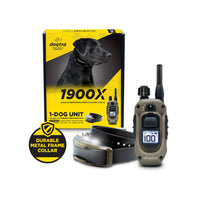 |
Dogtra 1900X | All-around, med–large dogs | 3/4 mile | 100 levels; Nick, Continuous, XPP vibration, Tone, Boost | View Dogtra 1900X on PetsTEK → |
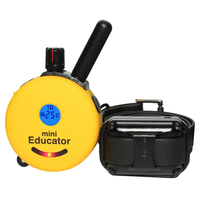 |
Mini Educator ET-300 | Small–med dogs, first-timers | 1/2 mile | 100 levels; Nick, Continuous, Vibration, Pavlovian tone, Boost (1–60) | View Mini Educator ET-300 on PetsTEK → |
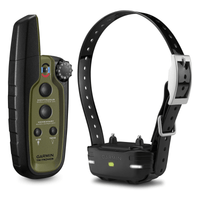 |
Garmin Sport Pro (bundle) | Hunting and field work (full bundle: collar + handheld) | 3/4 mile | 10 levels; Continuous, Momentary, Vibration, Tone | View Garmin Sport PRO on PetsTEK → |
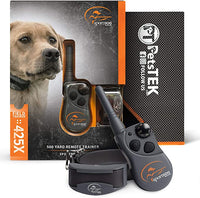 |
SportDOG 425X | Everyday training, good value | 500 yards | 21 levels; Nick, Constant, Tone, Pager vibration | View SportDOG 425X on PetsTEK → |
Frequently Asked Questions
Are shock collars cruel? A collar used at a low working level, with correct timing, on a dog that knows the command, is a communication tool — not cruelty. A collar used at high levels, or as punishment, absolutely can be. The tool isn’t the ethics; the training is.
Do shock collars hurt dogs? At a working level, most dogs show only a mild ear flick or head turn — they notice it, the way you’d notice a tap. If a dog yelps, jumps, or cowers, the level is far too high.
At what age can a dog wear a training collar? Not before 6 months, and only after the dog knows basic commands. Puppies learn through positive reinforcement first.
Can I leave a training collar on all day? No. Rotate the receiver every couple of hours, and don’t leave it on more than 8–10 hours, depending on the model. Constant pressure in one spot can irritate the skin — this is the most common beginner mistake.
Will a shock collar fix barking? That’s a different tool. Training collars are for command reinforcement. For barking, look at bark-control collars — or better, figure out why the dog is barking.
Next Steps
- Read the complete guide: Shock Collar for Dogs: The Complete Guide — choosing by size and temperament, fitting, safety, and more FAQs.
- Small dog? Shock Collar for Small Dogs — sizing, lowest effective settings, and fit for small necks.
- Free PDF: 7-Day E-Collar Training Plan — day-by-day, from first fitting to off-leash proofing.
- Shop the range: Browse training collars on PetsTEK
- Best Shock Collar for Dogs
- Dogtra vs E-Collar Technologies
- E-Collar vs Shock Collar
- Free PDF: How to Introduce Your Dog to a Training Collar
- Free PDF: Shock Collar Settings Explained: Beep, Vibrate, Stim
This site is by PetsTEK. The collars above are products we sell — the guide is written to help you choose the right one, including when the answer is “not yet” or “not this tool.”